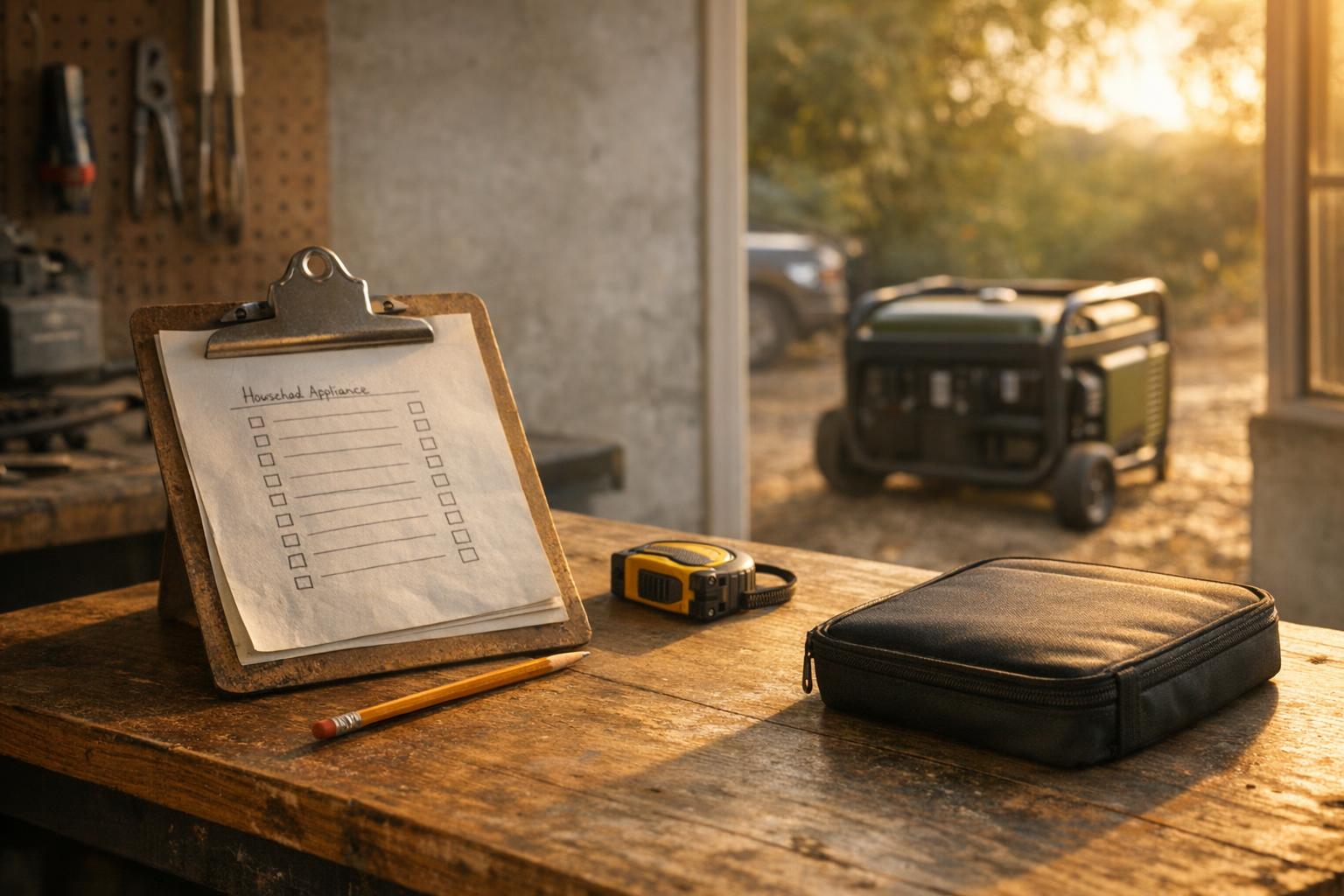
The right generator size starts with a list of loads, not a browse through product names. A deliberate hour with your appliance nameplates produces two numbers — total running watts and your largest starting delta — and those two numbers, with margin, are the whole sizing exercise.
Decide what an outage must not interrupt
Write down the loads that genuinely matter for a multi-day outage: refrigerator and freezer, a well or sump pump if you depend on one, furnace blower or a limited heating/cooling plan, lighting for a few rooms, communications and medical necessities. Everything else — ovens, dryers, water heaters, EV charging — belongs on a separate “nice to have” list that usually pushes you into equipment classes this site deliberately does not cover.
Ready.gov’s outage guidance is a sober checklist companion for this step: it focuses on food safety, medical devices and carbon monoxide precautions rather than gadgets.[1]

Collect nameplate running watts
For each load on the essential list, read the nameplate or manual: volts × amps gives watts where watts are not printed. Sum the loads you expect to run at the same time — not everything you own. A refrigerator that cycles is still counted at its running wattage, because your plan must survive the moment everything happens to be on together.
Resist generic wattage tables for the loads that decide your purchase. A modern refrigerator may run at 150 W where a chart says 700; a deep-well pump may need far more than a chart’s “well pump” row. Charts estimate; nameplates document.
Find your largest starting delta
Among your motor loads, identify the one with the largest gap between starting and running demand — usually the well pump, sump pump or air conditioner. That single worst-case delta is what your generator’s surge capacity must absorb on top of the running total, since two large motors rarely start in the same instant (and staggering starts manually is a reasonable outage discipline). Our starting-vs-running guide shows where to find honest starting figures.
Apply margin and translate to a class of generator
Take your running total, add 20% headroom, and round up: that is the minimum continuous rating worth shopping for. Check that the candidate’s peak rating covers your running total plus the largest starting delta. The sizing calculator does this arithmetic and rounding for you.
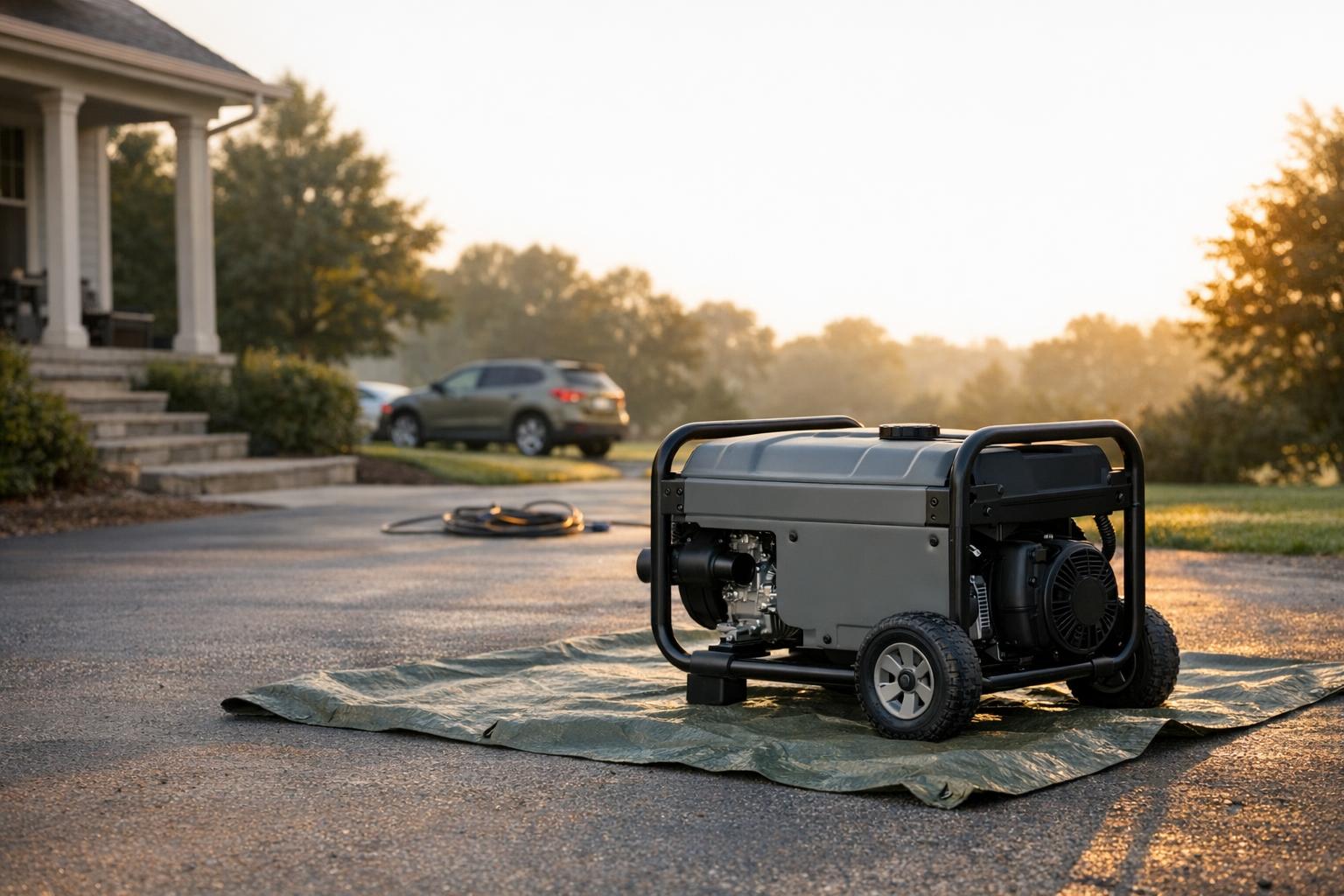
As rough classes: essentials-only plans often land in the 3,500–6,500 running-watt range; partial whole-home plans with a well pump or central furnace typically need 7,000–10,500 running watts — the territory of the large dual fuel frames in our home backup comparison.
Remember the fuel-side of sizing
A bigger engine burns more fuel at the same load, and runtime claims in listings are usually quoted at 25% or 50% load on gasoline. Recalculate honestly: a multi-day outage is won by stored fuel and refueling logistics as much as by wattage. Dual fuel models widen your options here — see the dual fuel comparison guide and our fuel storage guide.
What this site will not size for you
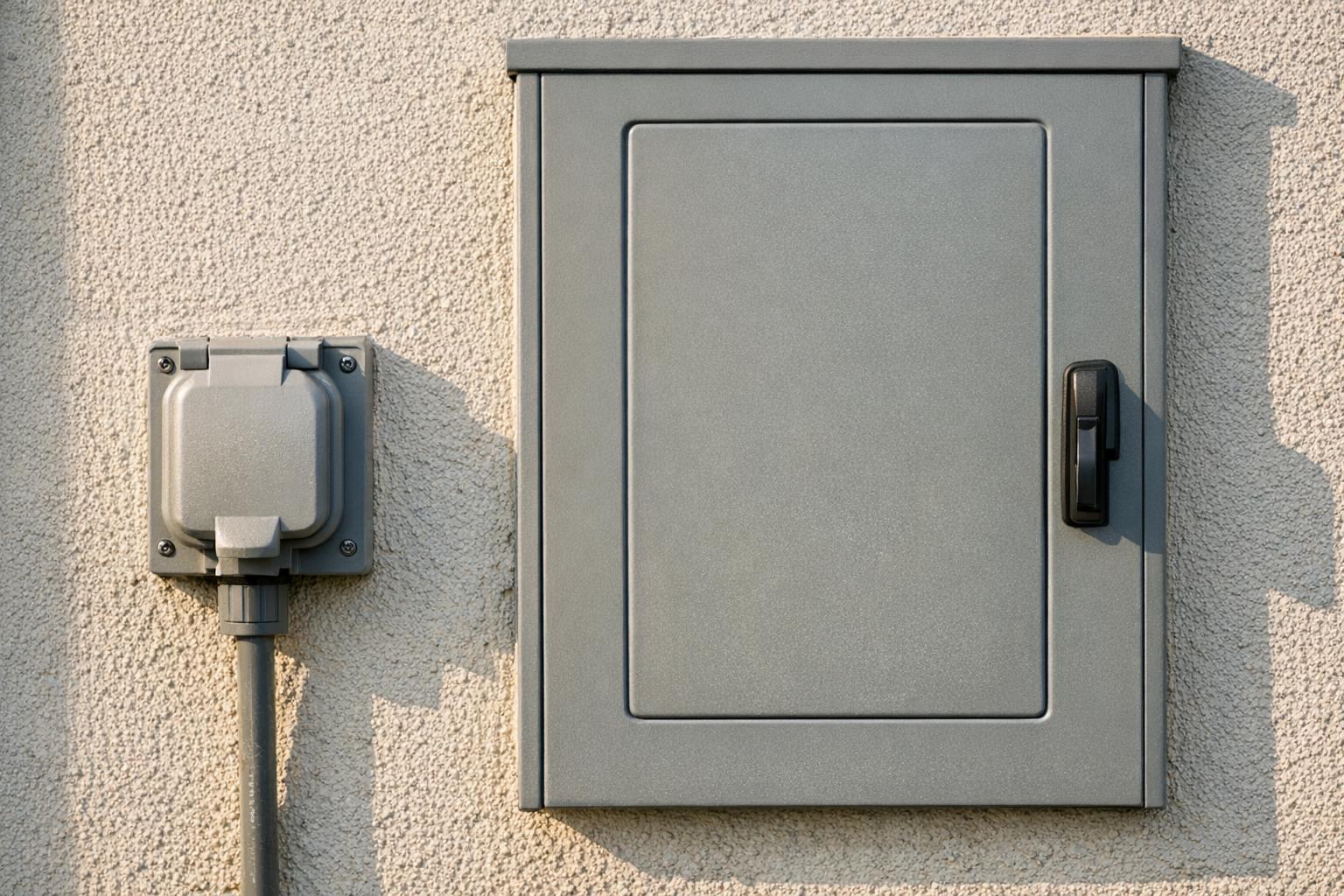
We do not recommend permanently installed standby generators or any connection to household wiring beyond what a licensed electrician installs and approves. If your load list includes hardwired circuits, the sizing conversation belongs with that electrician, alongside a professionally installed transfer switch — explained, strictly as information, in our transfer switch article. Backfeeding a house through an outlet is dangerous and illegal; no wattage math makes it acceptable.
Revisiting your list as circumstances change
A load list is not a one-time exercise. Home additions change the math: a new sump pump, a second refrigerator, a window air conditioner added for a hotter summer, or a medical device introduced into the household can each shift your essential total meaningfully. Revisit the list annually, and immediately after any appliance change that touches your essential circuits, rather than assuming the generator you bought years ago still has headroom for today's household.
It is also worth sizing conservatively rather than exactly. Two households with identical nameplate totals can have very different real-world experiences if one runs its equipment in cooler ambient temperatures that ease motor starting, while the other runs in summer heat that increases both compressor duty cycles and starting current. Padding your running-watts target by the 20% headroom described above, and confirming your candidate's continuous rating rather than its peak rating meets that padded number, is the difference between a generator that copes with a bad day and one that merely survives a good one.