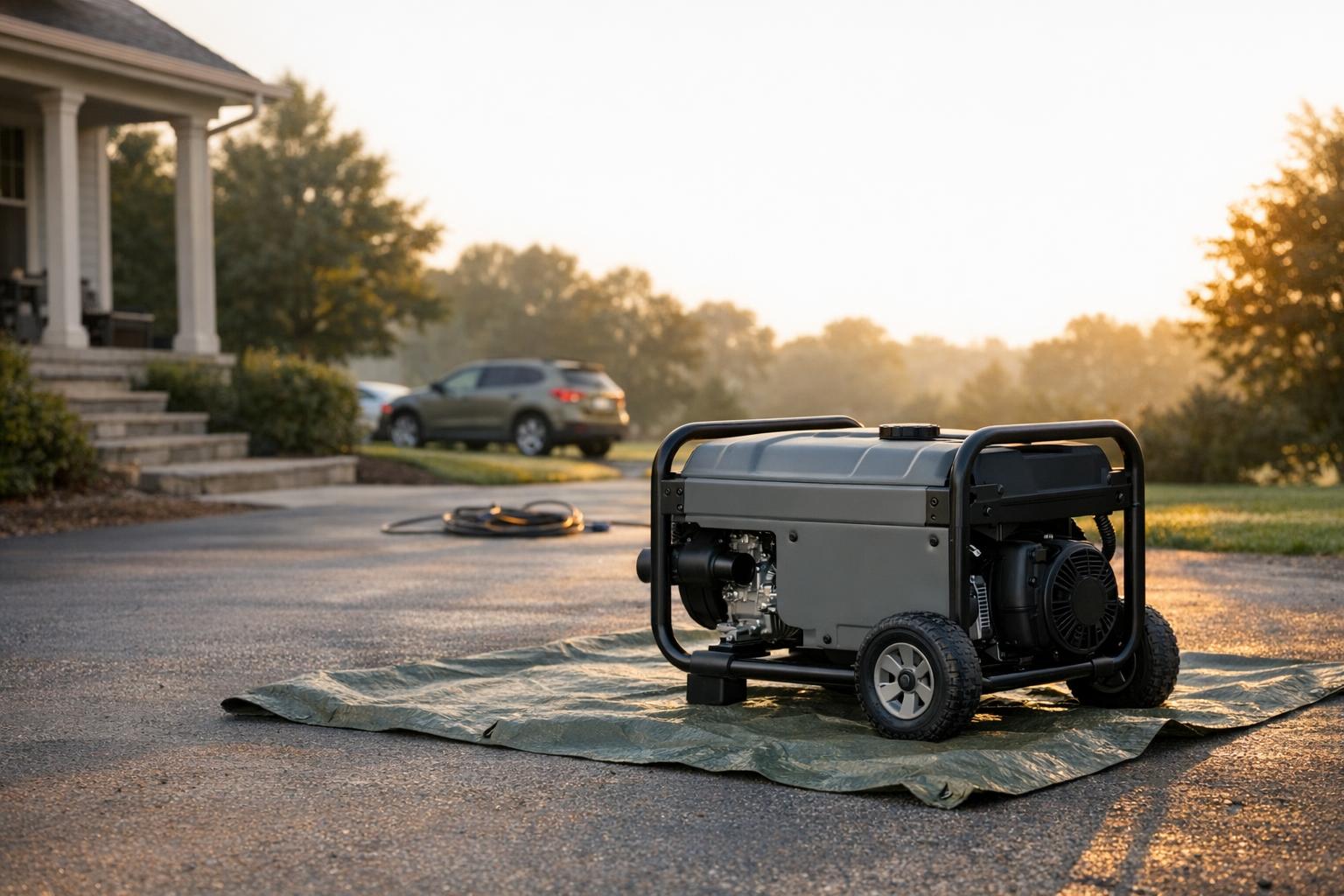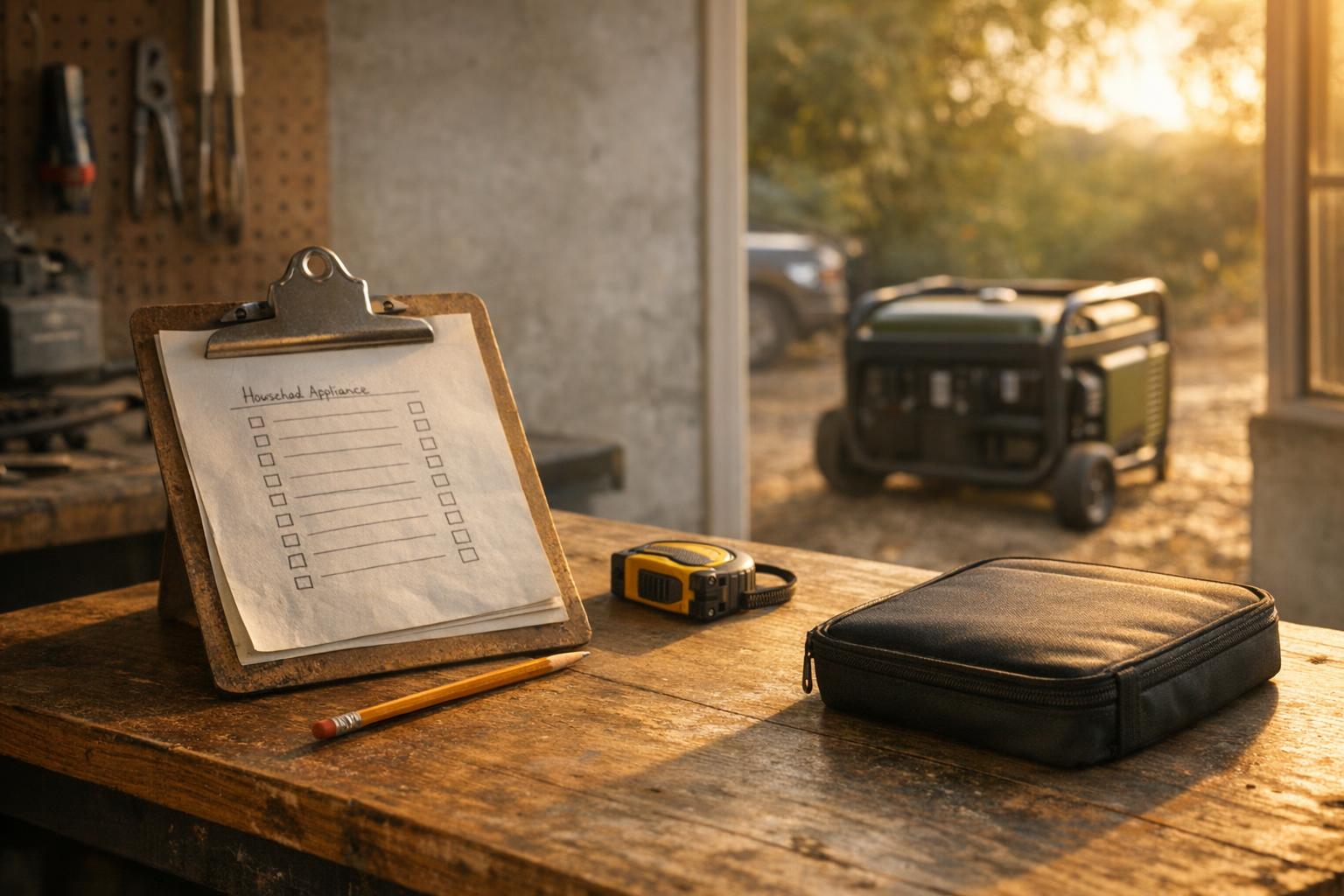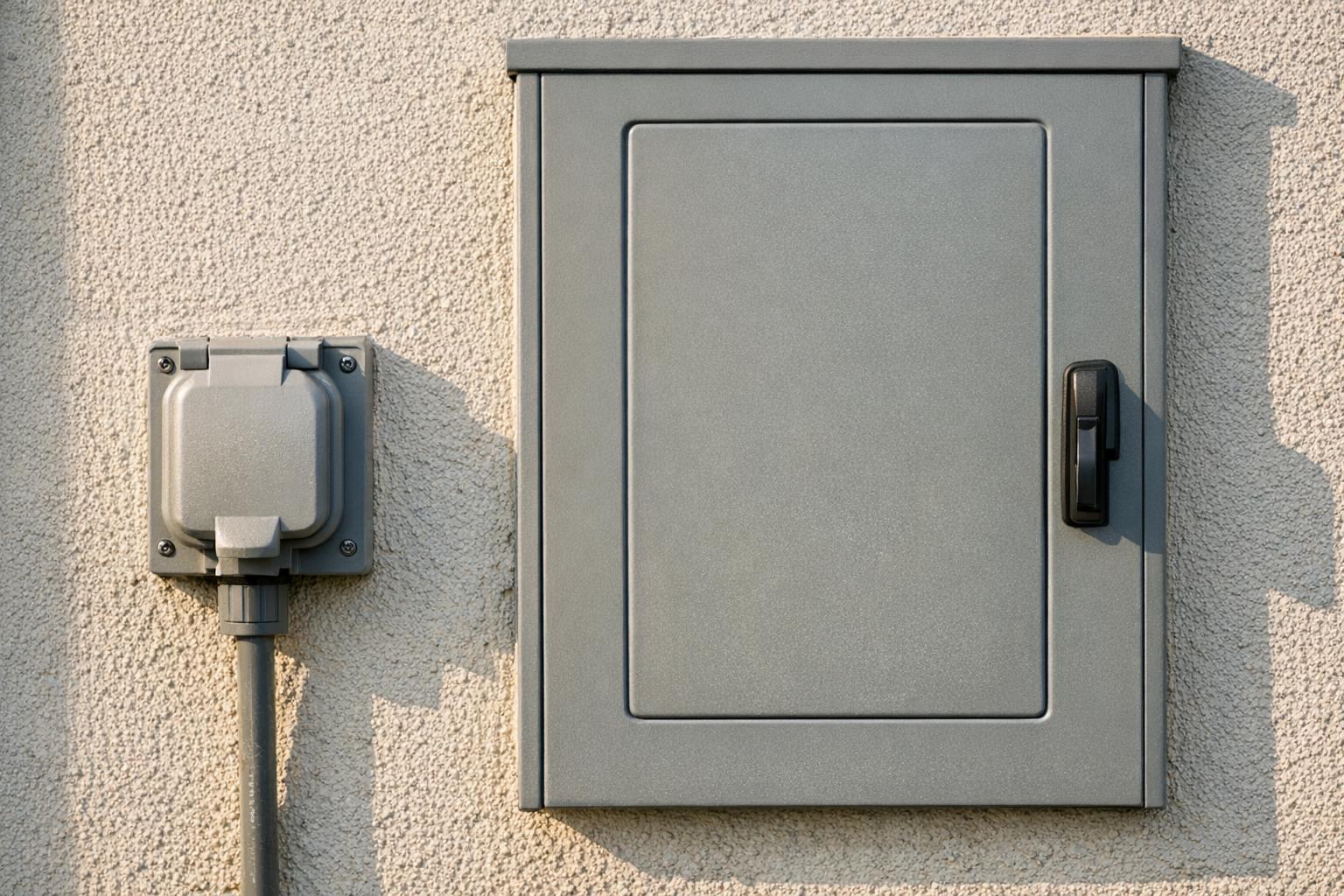
Extension cords can carry a surprising share of an essentials-only outage plan, but the moment you want hardwired circuits — a furnace, a well pump, ceiling lights — powered by a portable generator, the only safe route runs through professionally installed transfer equipment. This article explains what that equipment does. It is information, not instruction: the installing is an electrician’s job.
What a transfer switch actually does
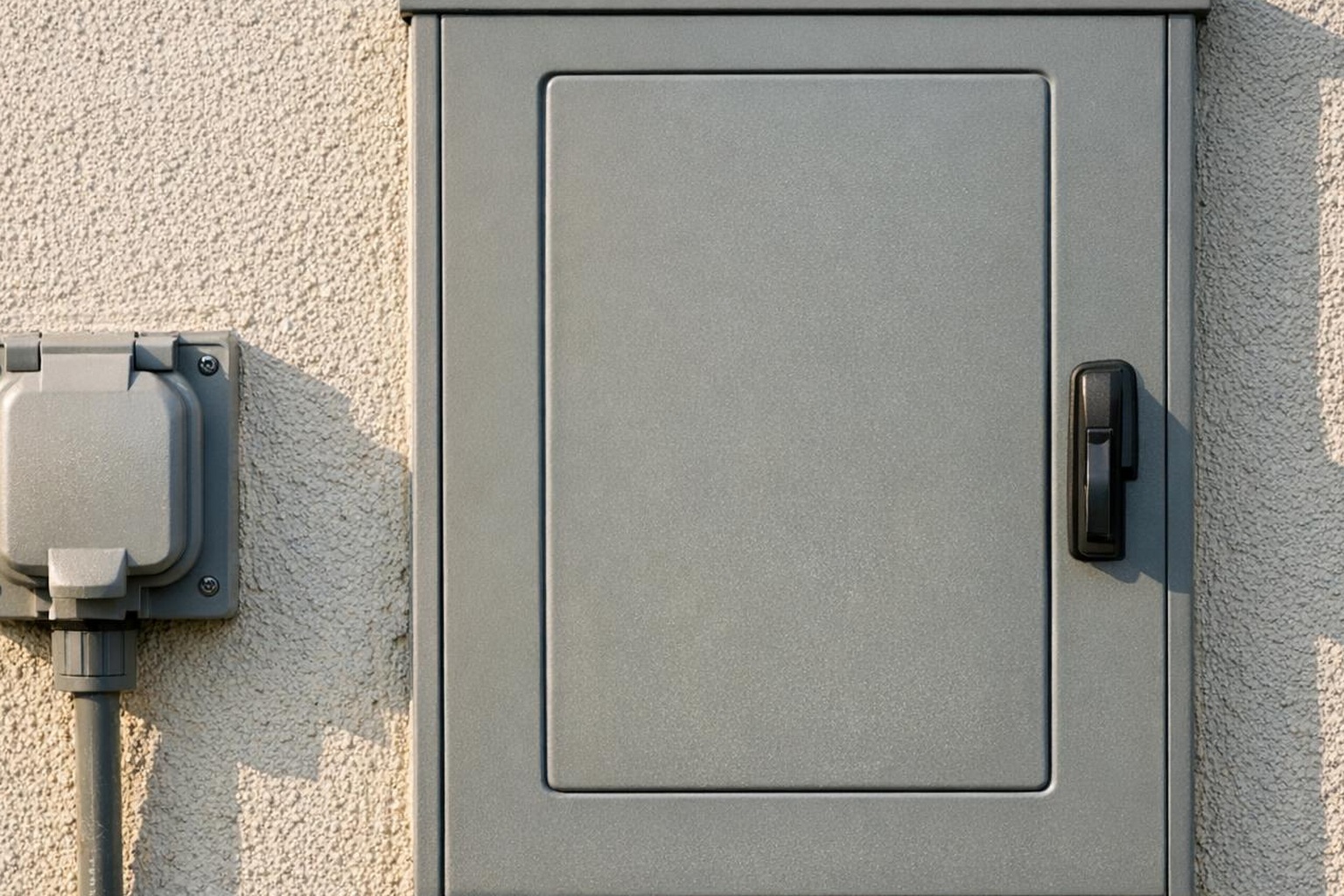
A transfer switch is a device installed at the electrical panel that connects selected household circuits to either the utility or a generator inlet — never both at once. That mechanical exclusivity is the entire point: it makes it physically impossible for generator power to flow backward into utility lines, and for utility power to meet your generator when the grid returns. Manual transfer switches for portable generators pair with an outdoor power inlet box, into which the generator connects with a heavy rated cord.
Why backfeeding is dangerous and illegal
“Backfeeding” — energizing a home by plugging a generator into a wall or dryer outlet with a double-male cord — bypasses every protection a transfer switch provides. It can energize the utility drop and electrocute line workers restoring your neighborhood, it can destroy your generator when the grid returns, and it typically violates electrical codes and voids insurance. There is no careful way to do it. If you read nothing else on this page: no transfer switch, no hardwired circuits.
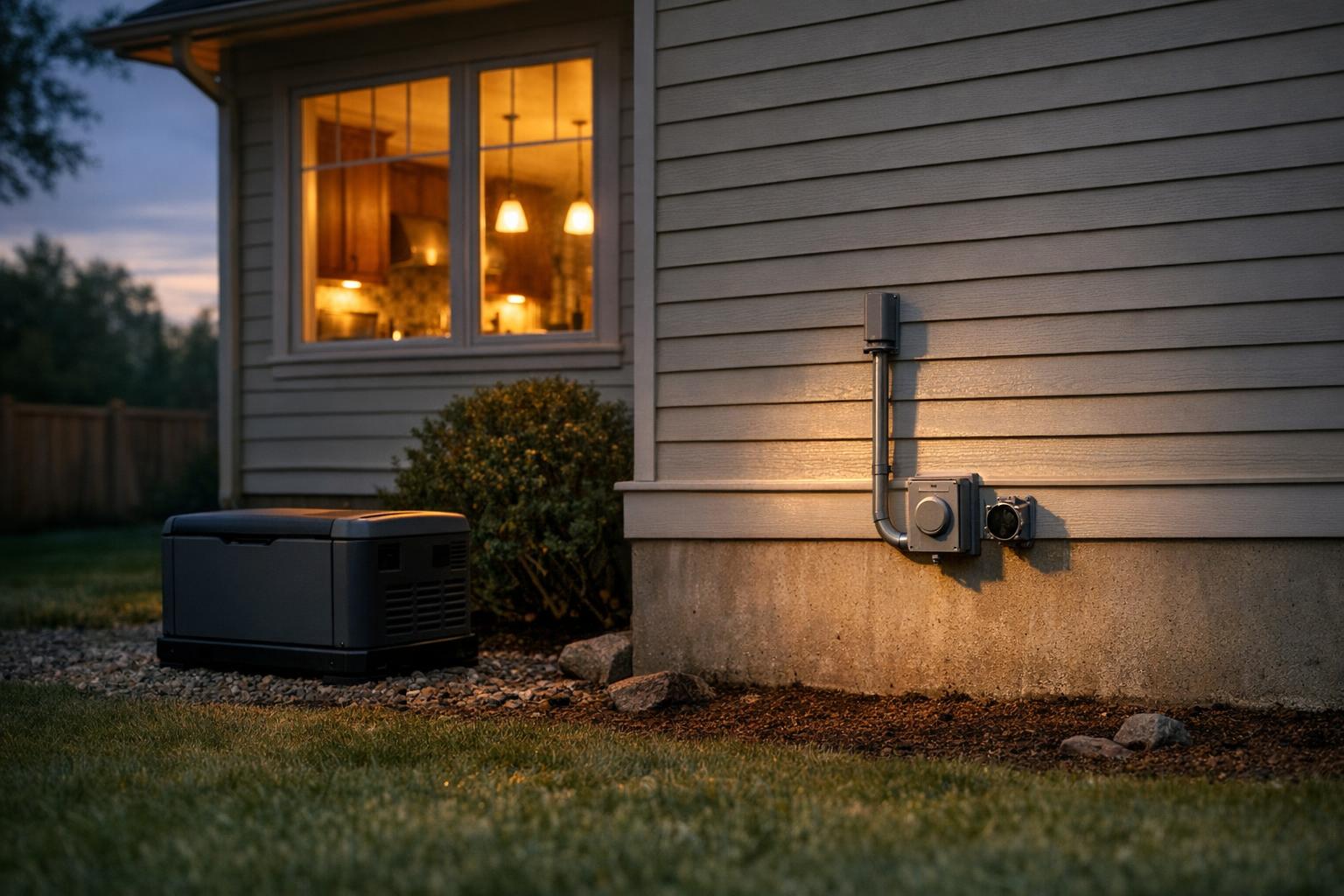
Whole-panel interlocks and circuit-select switches
Electricians install two broad styles for portable generators: an interlock kit at the main panel, which lets the generator feed the panel while mechanically forcing the main breaker off, with you managing which breakers stay on; or a dedicated multi-circuit transfer switch that hard-selects the six to ten circuits chosen in advance. Which suits your home depends on panel model, local code and your load plan — exactly the conversation to have with the licensed electrician who will pull the permit and do the work.
What to prepare before calling the electrician
Bring your load plan, not tools: the essential-circuit list and wattage totals from our sizing guide, the generator’s running and peak ratings and its outlet types (many large frames provide an L14-30R 240 V outlet), and your preferred generator position outdoors — which must satisfy the clearances in our CO placement guide before convenience is even discussed. The electrician sizes the inlet, cord rating and switch to match.
Generator-side settings belong to the manual
Some inverter generators require enabling a specific mode or bonding configuration when feeding a transfer switch, and grounding requirements vary by installation. These are manual-and-electrician questions, and the answers differ by model and jurisdiction. Our product pages quote only what listings document; nothing on this site is a wiring instruction.
The cost of doing it right — and of not doing it
A professionally installed interlock or transfer switch typically costs a few hundred to somewhat over a thousand dollars installed — real money, but a fraction of the cost of the generator strategy it makes safe and useful. Weigh it as part of the total project from the start. An essentials-only, extension-cord plan remains a legitimate alternative that requires no electrical work at all; our outage power plan guide shows both shapes.
Permits, inspections and why they matter
Most jurisdictions require a permit for transfer switch and interlock installation, and for good reason: the inspection confirms the mechanical interlock genuinely prevents simultaneous utility and generator connection, that grounding is correct, and that the inlet and wiring are rated for the generator's output. Skipping the permit does not just risk a fine — it risks an installation that looks correct but fails at the one moment it is tested, during an actual outage under load.
An inspected, permitted installation also matters for insurance. Many homeowner policies exclude or complicate claims tied to unpermitted electrical work, and an uninspected backfeed-style connection can void coverage entirely if it causes a fire or an accident. When you interview electricians for the job, ask specifically whether they will pull the permit and schedule the inspection as part of the quoted price — a contractor who treats that step as optional is not the contractor for this particular job. The modest added cost and scheduling delay of doing it by the book is the price of a system that actually protects you and your neighborhood's utility workers, which is the entire reason the equipment exists.
Timing the installation matters too. Scheduling an electrician during calm weather, well before your region's outage season, avoids the price premium and long wait times electricians often face immediately after a storm, when demand for transfer switch installation spikes across an entire region at once. Booking the work in spring for hurricane season, or in early autumn for winter storm season, is a small planning habit that pays off disproportionately.