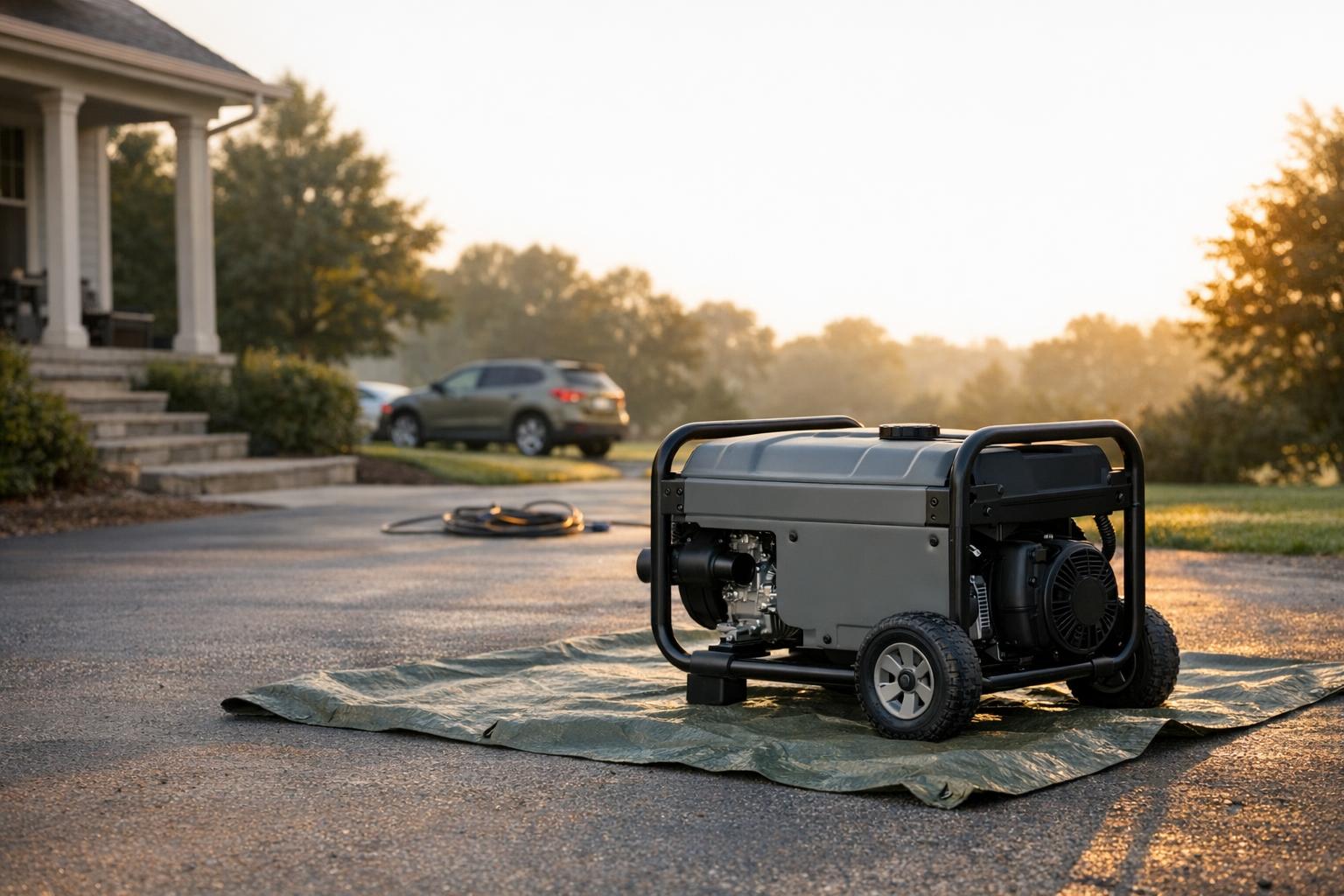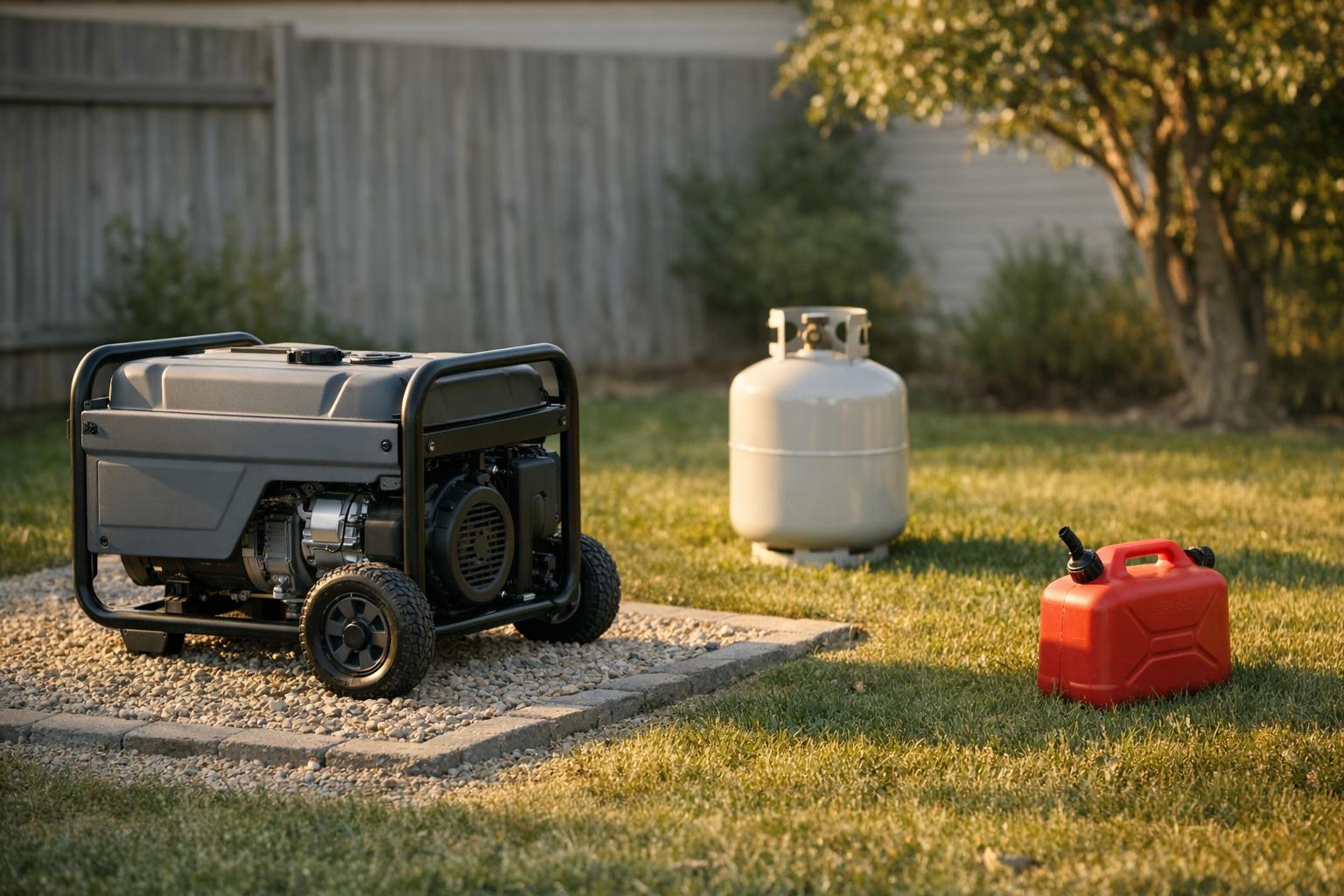
Every portable generator carries two headline wattage figures, and the larger one is almost always the one in the product name. Understanding the difference between starting watts and running watts — and which of your appliances care about each — is the single most useful skill for reading generator listings without being misled.
Two numbers, two different jobs
Running watts (sometimes printed as rated or continuous watts) describe the electrical load a generator can carry for hours at a time. Starting watts (peak or surge watts) describe a short burst the engine and alternator can deliver for a few seconds. Marketing names usually quote the peak figure: a “13,000-watt” open-frame unit typically runs closer to 10,500 watts continuously on gasoline, and less on propane. The listing’s specification text — not the product name — is where the honest pair of numbers lives.
The U.S. Energy Information Administration draws the underlying distinction plainly: power is an instantaneous measure in watts, while energy consumed over time is measured in watt-hours.[1] A generator is sized by power — both the brief peak and the sustained draw.
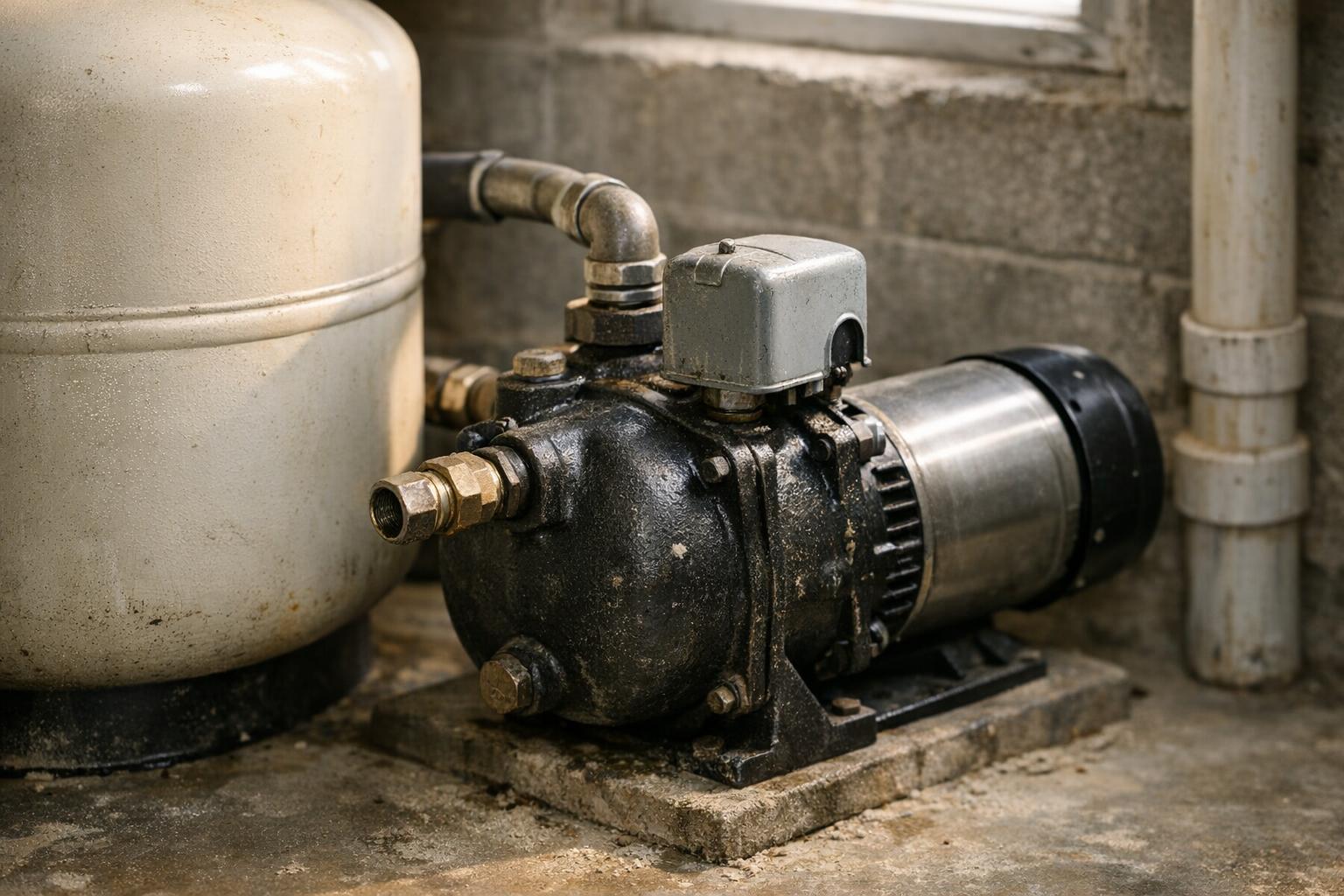
Why motors need the bigger number
Resistive loads — incandescent lights, space heaters, coffee makers — draw roughly the same wattage from the moment they switch on. Motor-driven appliances are different. A refrigerator compressor, well pump, sump pump or air-conditioning unit can draw two to four times its running wattage for the second or two it takes the motor to spin up. If your generator’s available surge headroom cannot cover that inrush on top of everything already running, the motor may stall, breakers may trip, or the generator may stumble.
This is why our sizing guide asks you to identify the single largest motor-start delta among your appliances, not just the sum of running watts.

Where to find honest numbers
Use the appliance nameplate or the manufacturer’s manual, not memory or generic wattage charts, for anything that matters to your plan. Nameplates state running amperage and voltage; multiplying the two gives running watts. Starting demand for compressor and pump motors is often listed as LRA (locked-rotor amps) on the nameplate — the honest source for the surge your generator must cover.
On the generator side, read the specification section of the exact listing and the downloadable manual. Dual fuel models publish separate gasoline and propane ratings; the propane numbers are the conservative pair to plan around, as our dual fuel guide explains.
Reading a listing like our comparators do
Our comparison pages extract running watts and peak watts only when the listing text states them with an explicit wattage term, and we record which part of the listing each number came from. A bare number in a product name is treated as the peak figure, because that is the near-universal marketing convention for open-frame generators. When a listing never states both numbers explicitly, we say so rather than guessing — the product is scored on documentation completeness instead of spec fit.
The margin that keeps the lights on
Running a generator flat-out at its continuous rating leaves no room for a thermostat cycling a compressor back on, and continuous full-load operation is hard on any engine. A practical habit is to keep planned running load at or below about 80% of the rated figure — the same 1.25× headroom logic electricians apply to continuous circuit loading. Our sizing calculator builds that margin in for you.
What wattage numbers never tell you
Two generators with identical wattage pairs can differ enormously in noise, fuel burn, output quality and starting behavior in cold weather. Wattage also says nothing about connection safety: powering anything beyond plug-in loads through household wiring requires a professionally installed transfer switch, covered in our transfer switch explainer. Treat the wattage pair as the entry ticket to a shortlist, not the whole decision.
Common label-reading mistakes worth avoiding
A frequent trap is treating the largest number on the box as the number that matters for your appliance list — it almost never is. Another is assuming that because two generators share the same headline wattage, they behave the same under a motor-start load; without knowing the surge duration and the alternator's design margin, that assumption can leave a well pump or air conditioner unable to start even though the peak figure looked generous on paper. A third mistake is ignoring the fuel-specific derate on dual fuel units: the wattage printed largest in a listing title is usually the gasoline figure, and propane operation can run meaningfully lower, which our dual fuel guide details fuel by fuel.
It also helps to separate the manufacturer's peak rating, which describes a short mechanical capability, from anything resembling a sustained-output promise. No responsible listing claims that peak wattage can be held for more than a few seconds, and treating it as a continuous number when planning a multi-hour outage is the single most common source of disappointment reported by new generator owners. When a listing is ambiguous about which number is which, the safest interpretation is the more conservative one — assume the smaller figure is your ceiling until the manual proves otherwise.