A backup generator is only as good as the fuel you can feed it, and fuel storage is where good outage plans quietly become household hazards. The rules worth following come from container manufacturers, fuel suppliers, your generator’s manual and fire-safety authorities — this guide organizes them into a workable home setup.
Approved containers, and only approved containers
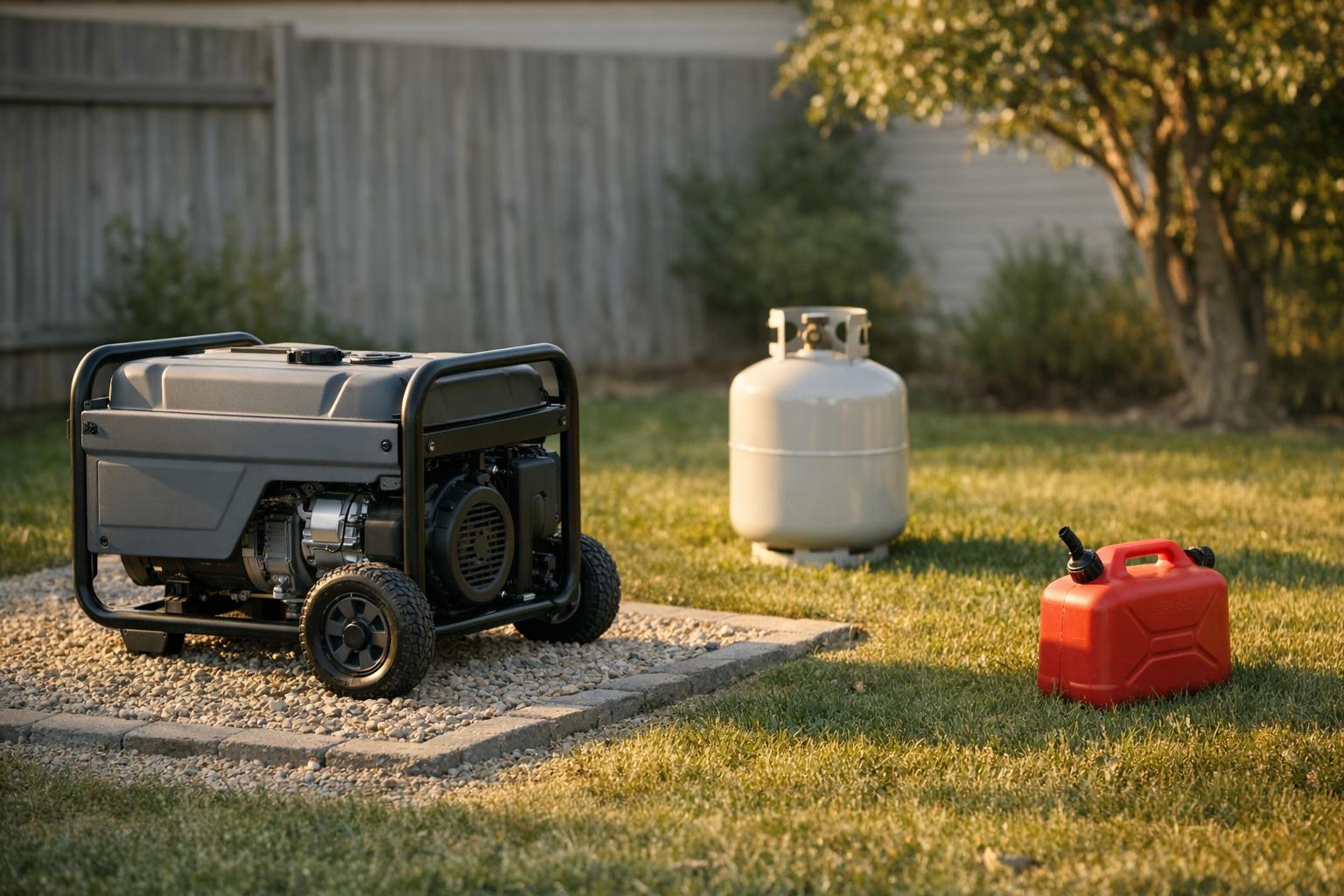
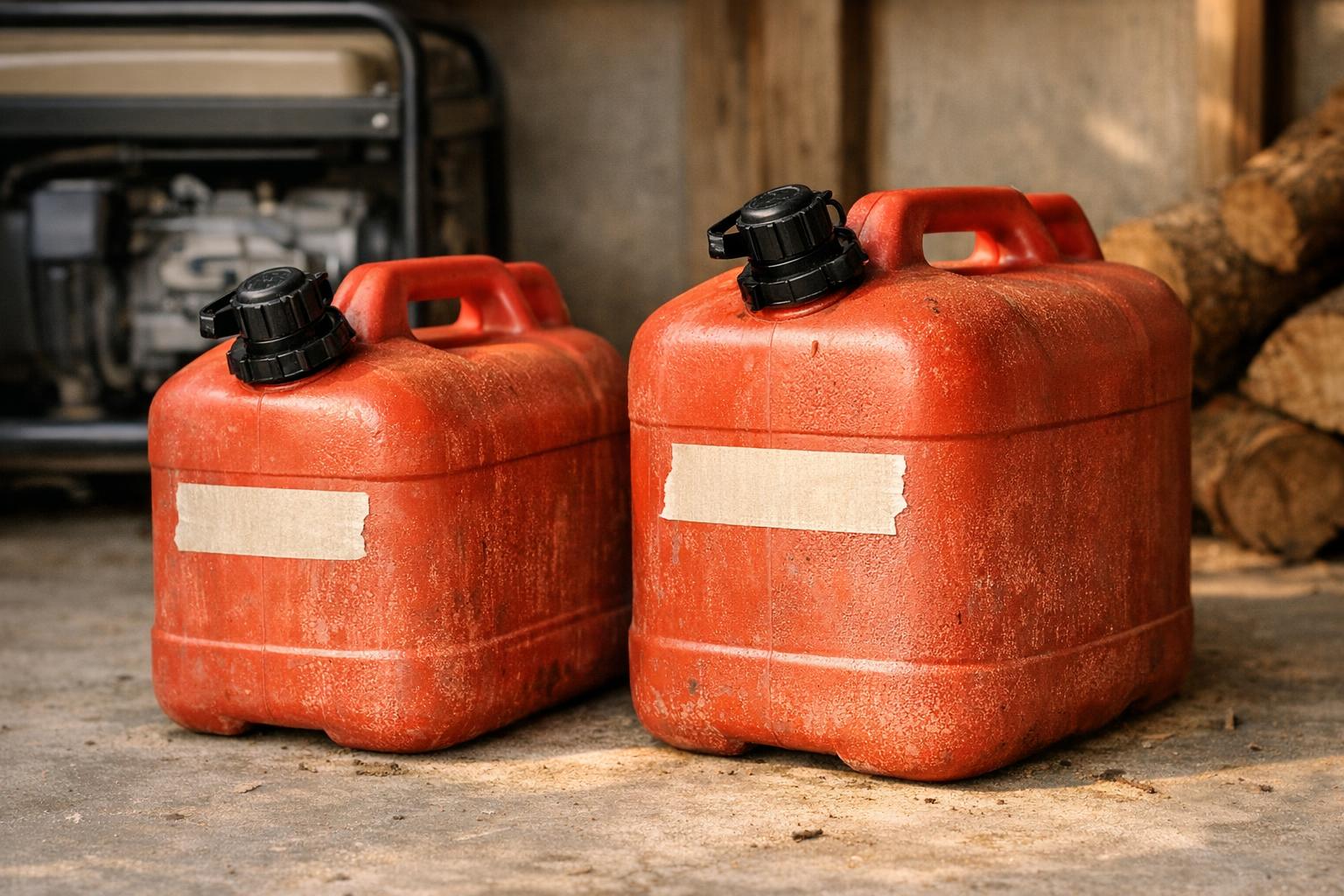
Gasoline belongs in containers designed and rated for it — listed portable fuel containers with flame-mitigation devices, kept tightly capped. Never in drink bottles, never in open buckets, never in containers a child could mistake. Propane lives in DOT-rated cylinders with intact valves and current requalification dates; the sealed 20 lb exchange cylinder is the practical standard for dual fuel generator use.
Where fuel should live
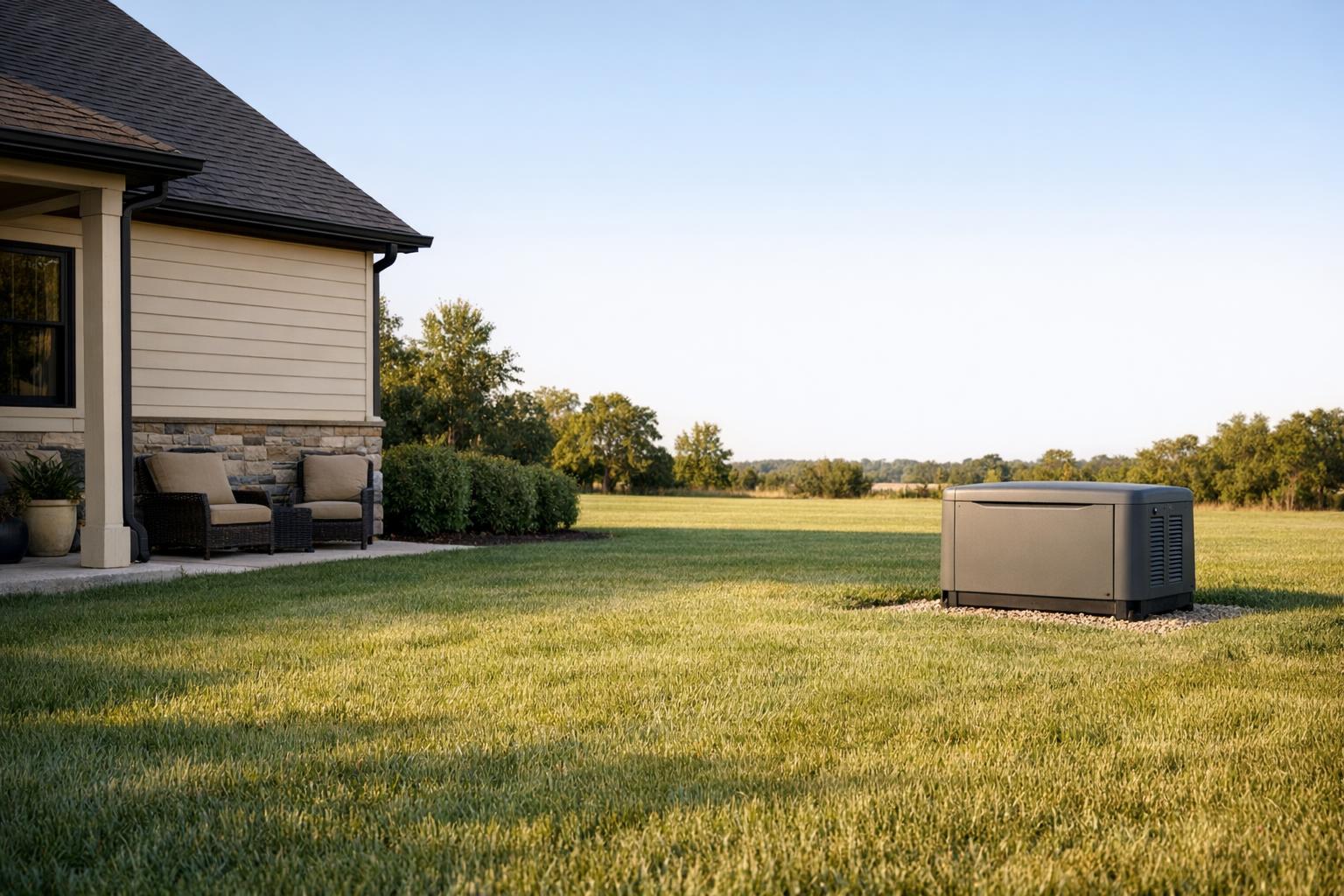
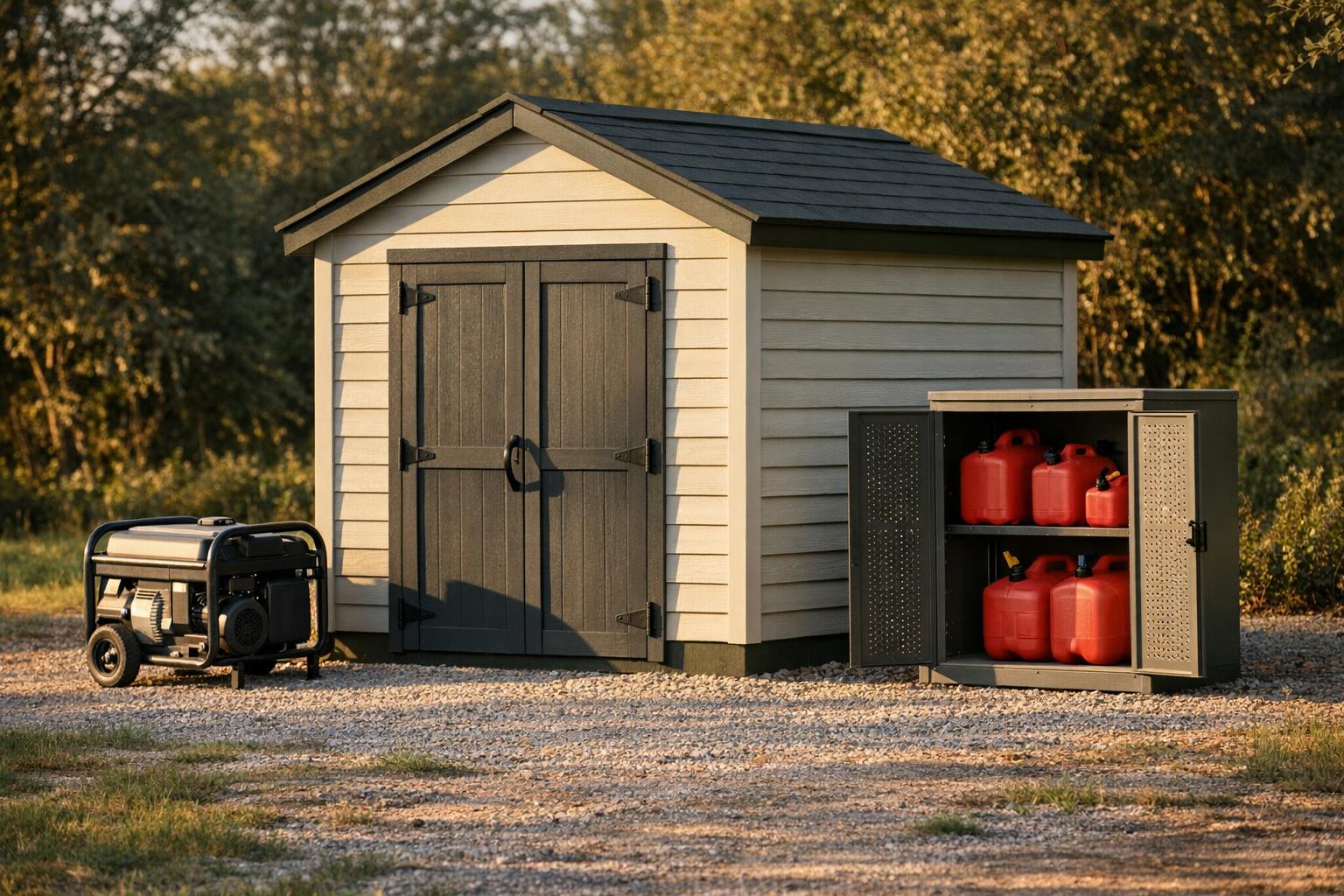
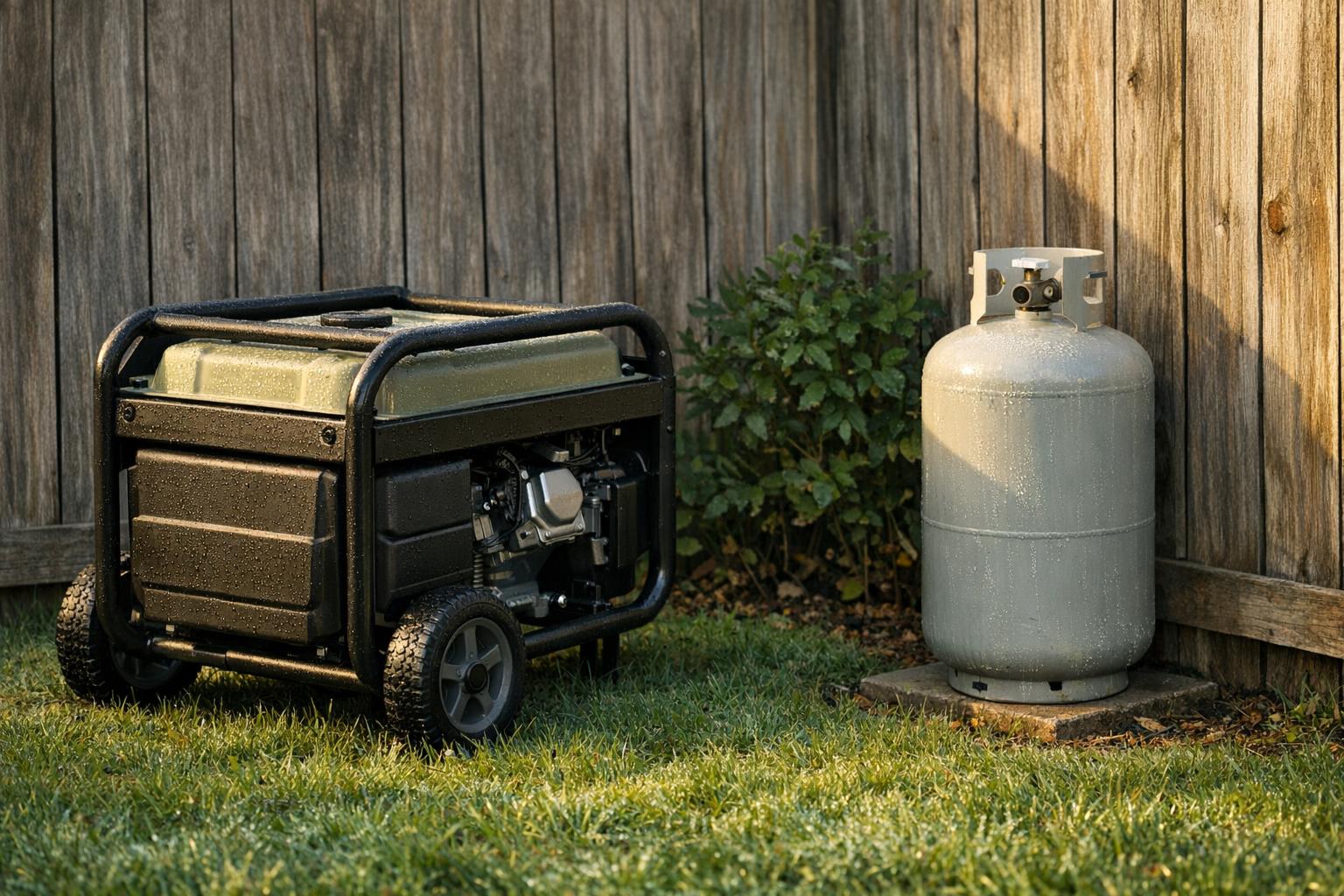
Both fuels belong outside living spaces: a detached shed or a well-ventilated outdoor storage area away from the house, away from ignition sources, out of direct sun and out of vehicle passenger areas. Propane cylinders are stored outdoors, upright, valve closed — never in a basement or an attached garage. Follow the storage placement guidance in your generator and container manuals and any limits your local fire code sets on quantities; when in doubt, your local fire department answers storage questions for free.
Rotation keeps gasoline usable
Gasoline ages in weeks to months. Stabilizer extends usable life per its label, but the robust practice is rotation: date every can when filled, and empty the oldest into your vehicle on a schedule, refilling fresh. A simple marker pen and a calendar reminder outlast good intentions. Propane does not age — which is precisely the storage argument made in our dual fuel comparison.
How much to keep on hand
Work backward from your load plan and the runtime documentation of your unit: a partial whole-home load can consume a large frame’s tank in well under a day, and listing runtimes are quoted at fractional loads. Decide how many days of outage you are provisioning for, translate to gallons and cylinders using your generator’s documented consumption, then check that quantity against what you can store safely and legally. Storing less, plus a realistic resupply plan, beats hoarding beyond your safe capacity.
Refueling discipline during an outage
Refueling is the moment storage safety meets operating safety: shut the generator down and let it cool before adding gasoline — fuel on a hot engine is how outage refueling starts fires. Swap propane cylinders with the valve closed and check connections per the manual. Keep a rated fire extinguisher between the fuel store and the generator position, and keep the two positions separated as described in our placement guide.
The seasonal audit
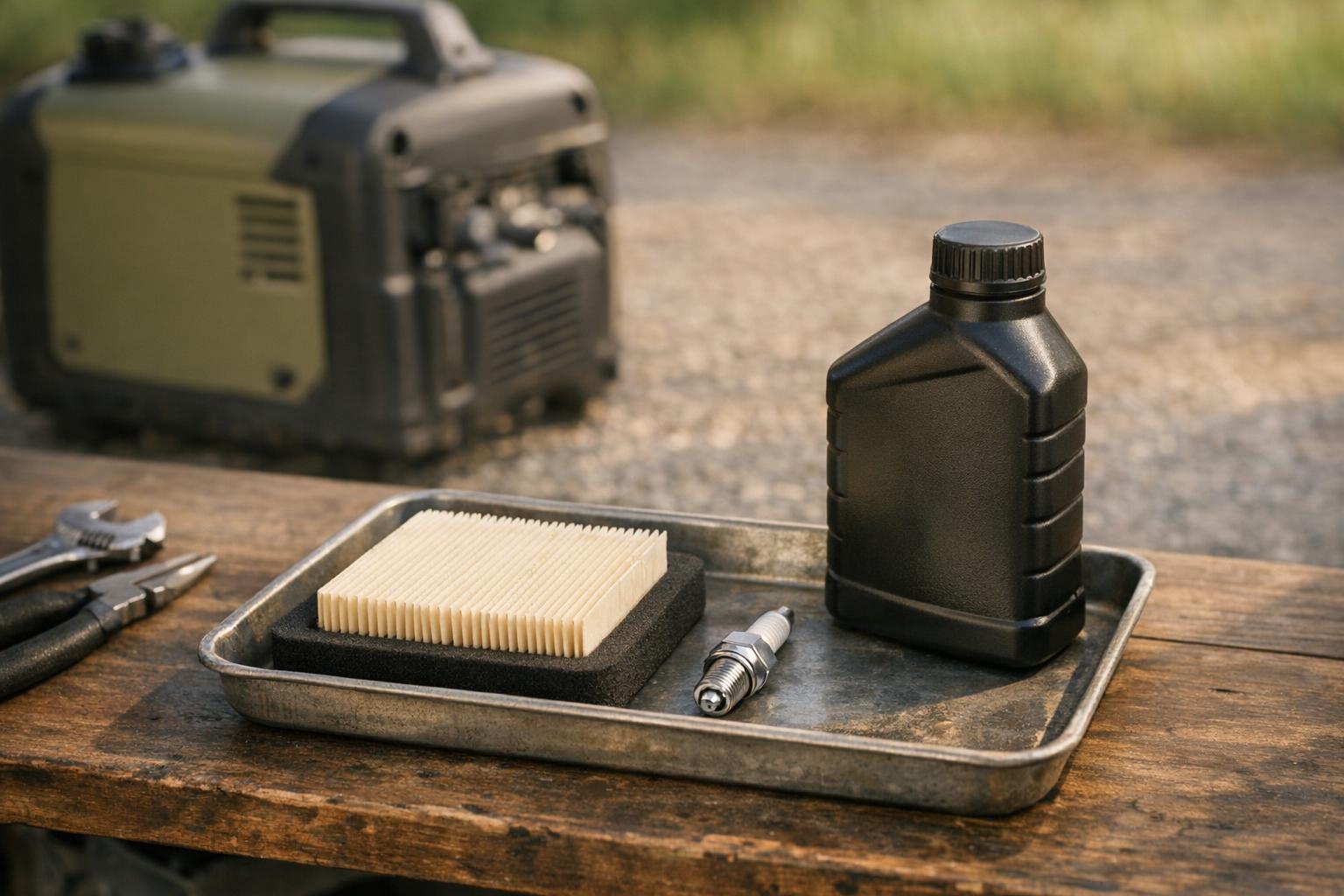
Twice a year, audit the fuel corner: container condition and caps, cylinder dates and valve state, stock quantity against plan, rotation dates honored, extinguisher charge indicator green. Ten minutes, alongside the pre-season generator rehearsal from our maintenance schedule, keeps the whole fuel side of your outage plan boring — which is the goal.
What to do with fuel after the outage ends
The moment power returns is when fuel discipline is easiest to forget, and that is exactly when it should happen. Note how much fuel you used and how quickly, compare it against your runtime assumptions, and adjust your stored quantity for next time if the outage revealed you were under- or over-provisioned. Any gasoline that is approaching the end of its usable life per your stabilizer's label should go into a vehicle promptly rather than sit for another season on the theory that it might still be needed.
Propane cylinders that were opened during the outage should be checked for a secure valve and stored exactly as they were before — upright, outdoors, away from the house — rather than left wherever the last refueling happened to occur. If a cylinder is due for its periodic requalification, a fresh outage is a good prompt to have that done before the next one rather than discovering an expired cylinder mid-emergency. Treat the post-outage fuel check as part of the same rehearsal discipline described in our outage power plan guide: a plan is only as good as its restocking after each use.
Labeling matters more than it might seem. In a household with multiple fuel cans for different equipment — a generator, a lawn mower, a chainsaw — clearly marking each can's contents and fill date prevents the wrong fuel mixture from ending up in the wrong engine, a mistake that can cause expensive damage or a failure to start precisely when the generator is needed most.