During a multi-day outage, the practical question is not only how big your generator is, but how long it can keep going. For a portable generator the answer has two parts: how long one tank lasts at a given load, and how many hours the engine can run before the manual calls for maintenance such as an oil change. This guide uses published owner’s manuals from Generac, Honda and DuroMax, plus CPSC and FEMA safety guidance, to explain both. It does not invent a universal hour limit, because the manuals do not give one.
How long can a generator run? The short answer
Short answer A portable generator can run continuously for as long as it is refueled safely, kept within its rated load and maintained on the manual’s schedule; one tank typically lasts the run time the manual lists at 50% load, such as 8 to 11.5 hours in the manuals reviewed here. You must shut it down and let it cool before each refuel, and check oil at the intervals the manual sets, so in practice “continuous” means a series of tank-length runs.
Manuals list run time at a stated load. Generac’s GP Series manual lists “Run Time at 50% Load 11.5 Hours” for one configuration and 10 hours for another; the DuroMax XP12000EH manual lists 8 hours at 50% on gasoline and 7 hours on a 40 lb propane cylinder. Those are manufacturer figures at a specific load, not guarantees at every load.
- Per tank: the manual’s run-time-at-load figure is the planning number.
- Refueling: engine off and cooled before every refuel (Honda, DuroMax, Ready.gov).
- Oil checks: before each use or every 8 hours of operation in Generac’s GP manual.
- Load: stay at or below the rated (running) output for continuous operation (Honda, DuroMax).

Run time per tank: what the manuals list
| Manual | Fuel | Stated run time | Load basis |
|---|---|---|---|
| Generac GP Series (one engine configuration) | Gasoline, 7.9 gal tank | 11.5 hours | 50% load |
| Generac GP Series (another configuration) | Gasoline | 10 hours | 50% load |
| DuroMax XP12000EH | Gasoline, 8.3 gal tank | 8 hours | 50% load |
| DuroMax XP12000EH | Propane, 40 lb cylinder | 7 hours | 50% load |
Two patterns follow from those figures. First, run time is always tied to a load percentage, so a heavier load shortens it. Second, the same generator can run for a different time on propane than on gasoline. Our dual fuel vs gasoline guide and fuel storage guide cover how to plan fuel for several days.
Illustrative example: if a manual lists 8 hours at 50% load and you plan 24 hours of operation at a similar load, the formula 24 ÷ 8 = 3 gives about three tank-length runs, each followed by a shutdown, cool-down and refuel. Real consumption varies with load; size fuel storage with margin and local storage rules in mind.
Refueling: why “continuous” always includes stops
No manual we reviewed allows refueling while running. Honda’s EU2200i manual says “Do not refuel during operation” and to refuel “only outdoors in a well-ventilated area.” DuroMax says to turn the generator off before refueling and to “allow the engine to cool for several minutes before refueling.” Ready.gov gives the reason: “Fuel spilled on hot engine parts can ignite.”
- Shut down: turn off the engine and disconnect loads first (Generac advises disconnecting loads before starting or stopping).
- Cool down: wait before opening the fuel cap (DuroMax, Ready.gov).
- Refuel outdoors: never in a garage or enclosed space (Honda).
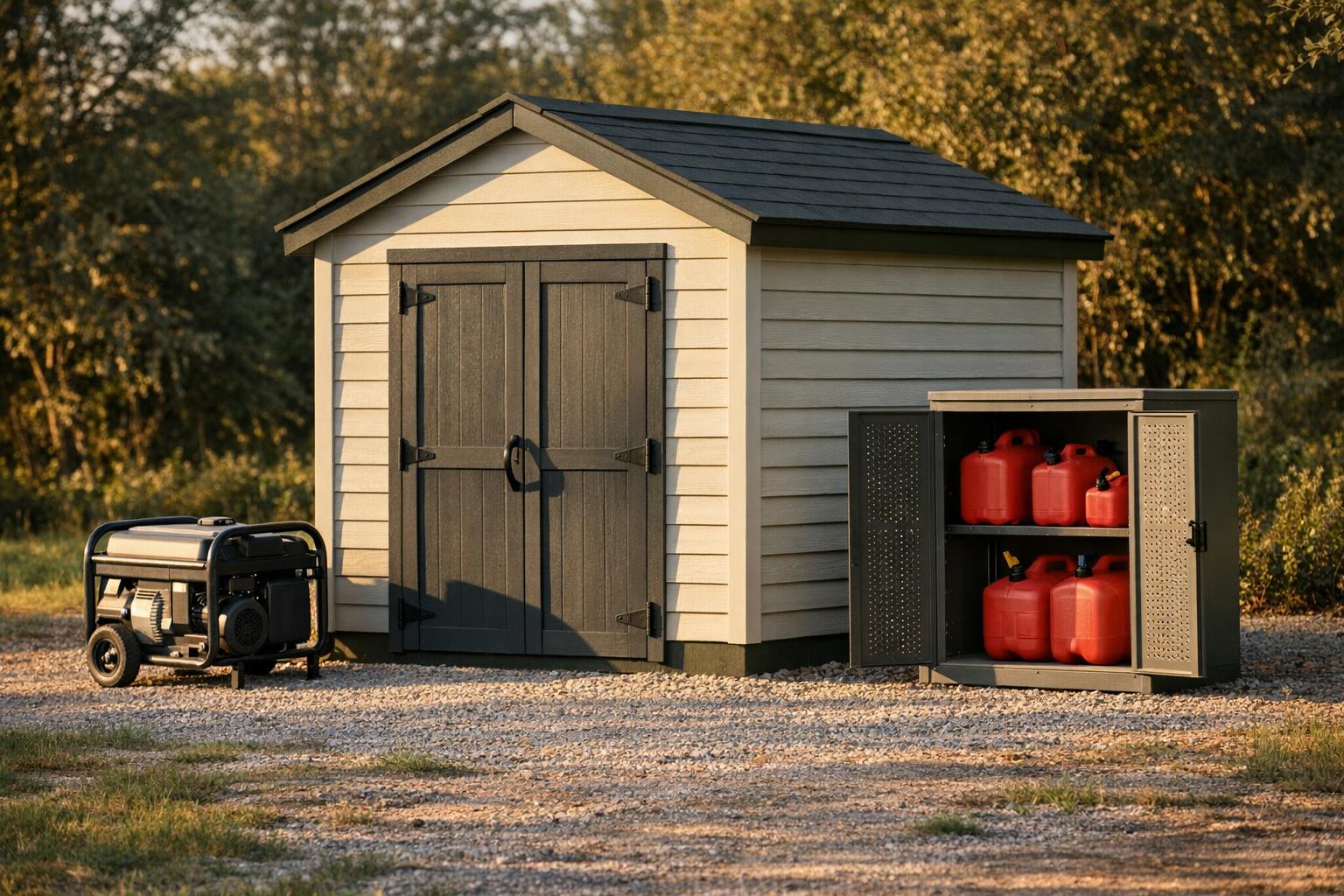
- Store fuel outside living areas: in labeled, non-glass safety containers (CPSC).
Those stops are also a good moment for the oil check described next. A written rhythm for them belongs in your home outage power plan.
Oil and maintenance intervals during long runs
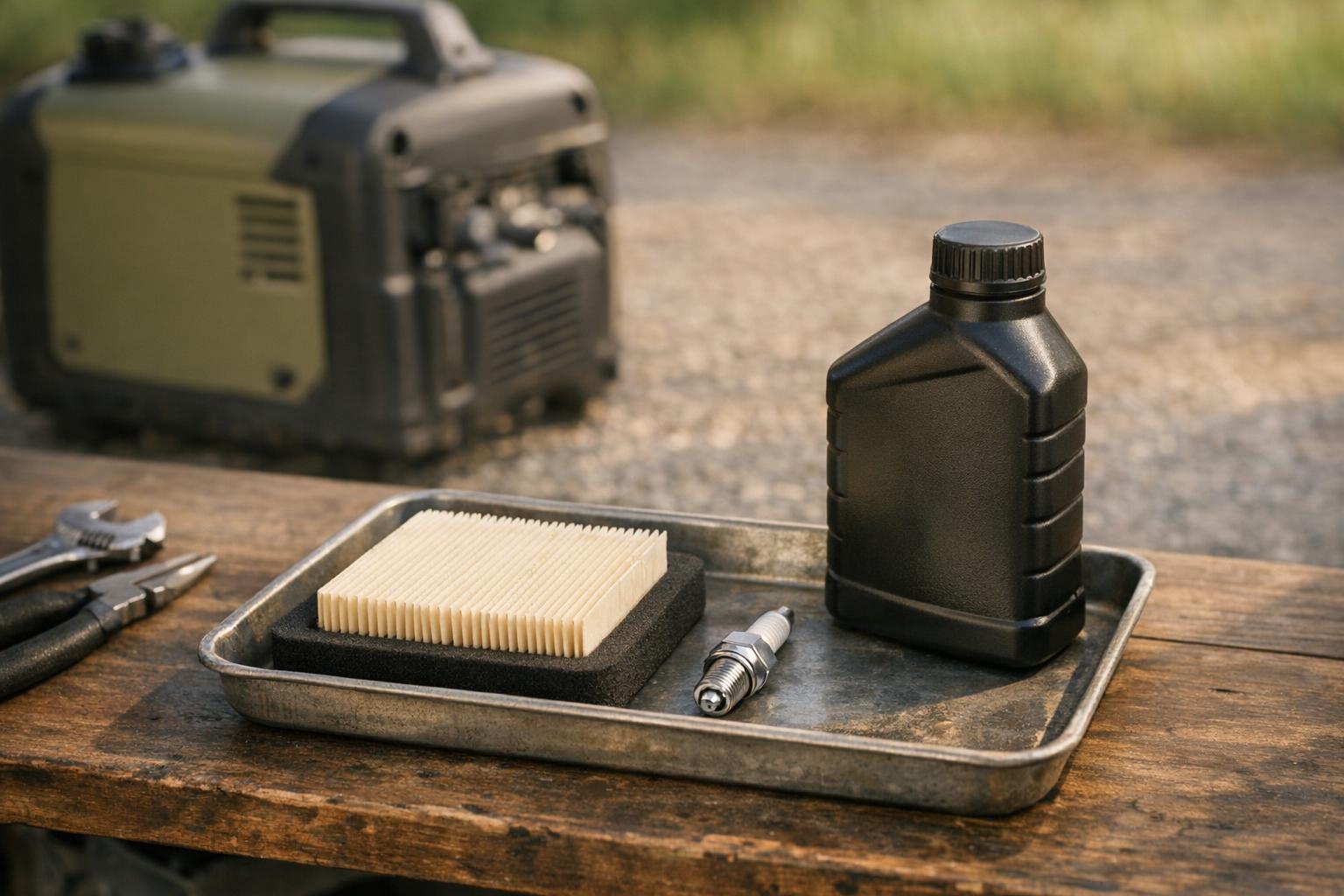
Long outages accumulate engine hours quickly, and manuals schedule maintenance by hours as well as by calendar. Generac’s GP manual says to inspect the engine oil level “prior to each use, or every 8 hours of operation,” lists an oil change every 100 hours or every year, and calls for changing the oil after the first 30 hours of operation. It adds: change oil and filter every month when operating under heavy load or in high temperatures.
| Manual | Oil check | First oil change | Regular interval |
|---|---|---|---|
| Generac GP Series | Each use or every 8 hours | After first 30 hours | Every 100 hours or every year |
| Honda EU2200i | Before each use | First 20 hours | Per the manual’s maintenance schedule |
| DuroMax XP12000EH | Before each use | After first 6–8 hours on conventional oil | Per manual schedule |
A three-day outage at near-continuous use can approach the first-oil-change mark of a new generator. Keep the manual’s oil type and quantity on hand; our maintenance schedule guide lists the parts box to keep ready.
A simple run log for multi-day outages
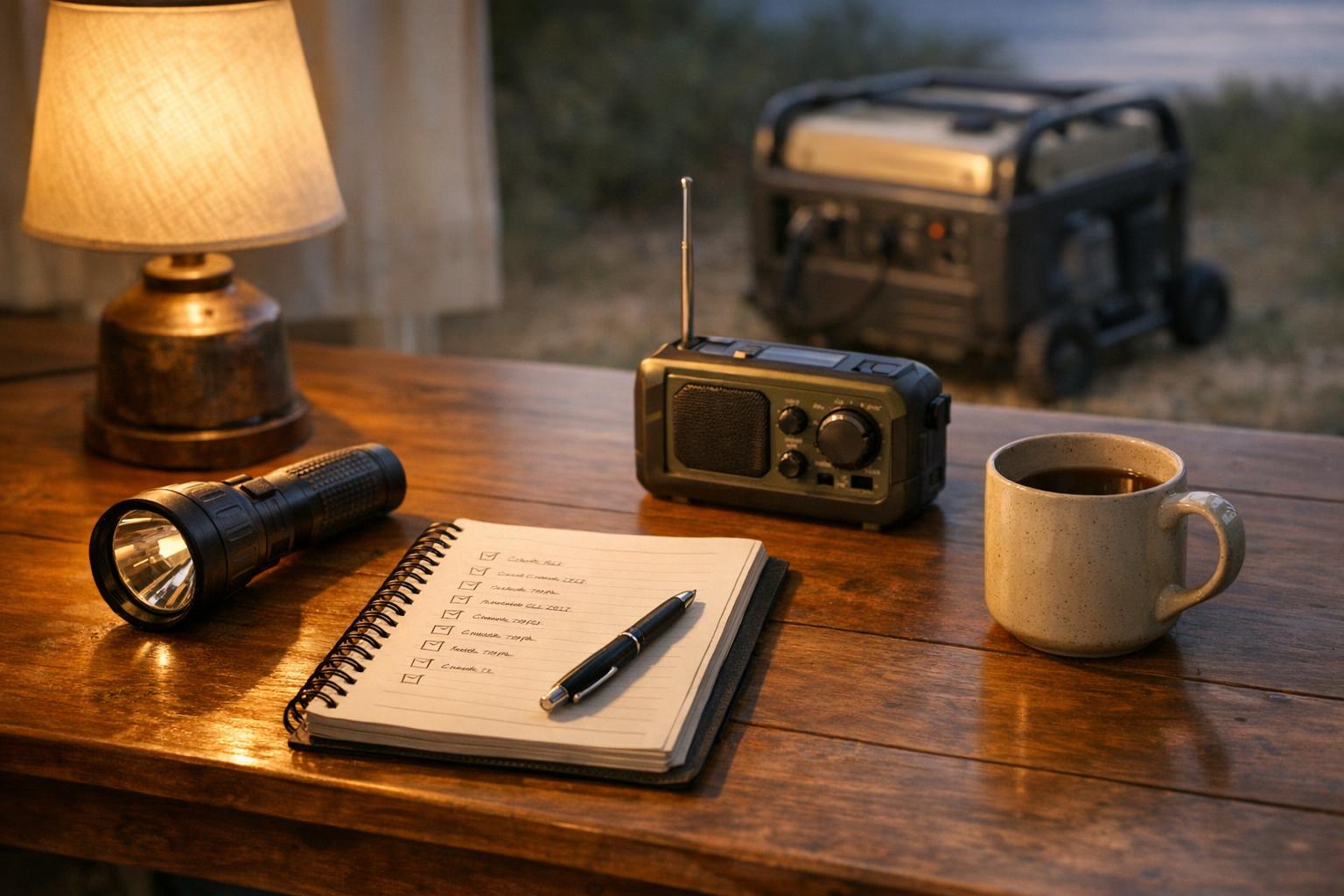
Because both refueling and maintenance depend on hours, a written log is the easiest way to keep a long run safe. Generac’s GP manual mentions an hour meter that tracks hours of operation for scheduled maintenance; where a unit has none, a notebook kept with the generator does the same job.
- Start and stop times: for each tank-length run.
- Fuel added: and the fuel type, for dual fuel units.
- Oil checks: at each refuel stop, per the manual’s interval.
- Loads connected: to stay under the rated output.
A log also tells you, after the outage, whether the first oil change or another hour-based service item is due.
Load and placement limits on long runs
Honda’s manual is direct: “For continuous operation, do not exceed the rated power.” DuroMax defines rated wattage as the maximum the generator can output “on a continuous basis,” while surge wattage is available only briefly. Running near the limit for hours also shortens run time per tank, as the 50%-load basis of manual figures implies.
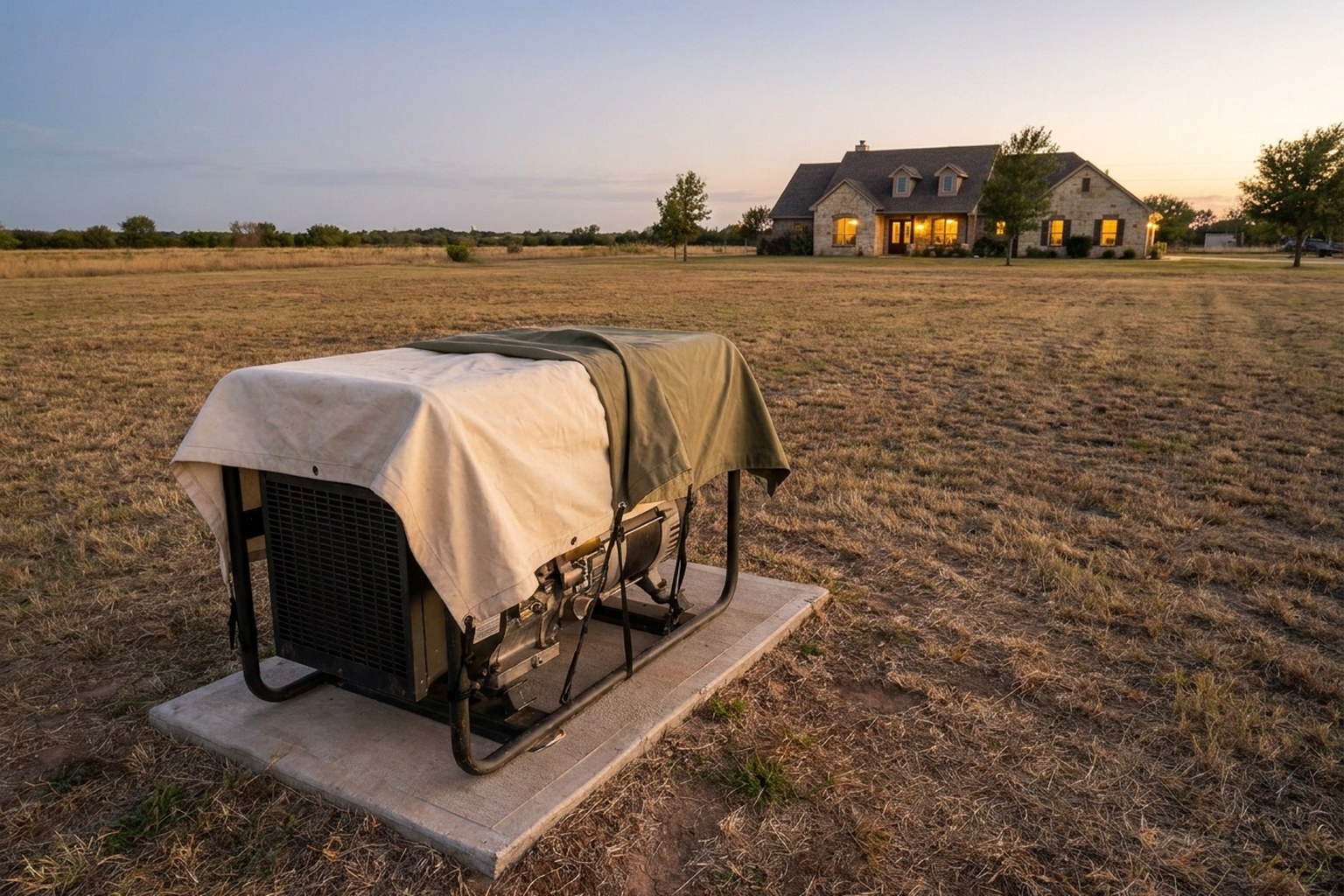
Placement is non-negotiable: the CPSC says to operate a portable generator outside only, at least 20 feet from the house, with the exhaust directed away from the home, and never inside a home, garage, basement, crawlspace, shed or on a porch. FEMA’s Ready.gov repeats the 20-foot distance from windows, doors and attached garages and recommends battery-backup CO detectors on every level. Keep the generator dry, since touching a wet generator can cause electrical shock.
- Stay below rated output: for continuous operation (Honda).
- Keep CO alarms working: and get outside immediately if one sounds (CPSC).
- Protect from rain: without moving the generator indoors or near openings (CPSC).
- House connection: transfer switch or interlock installed by a licensed electrician; never backfeed through an outlet.
Choosing a generator for long outages
If long run time matters most, compare the manual’s run time at a stated load and tank size, check the output on the fuel you plan to store, and confirm the maintenance intervals before you buy. Our best dual fuel generators under 10,000 watts compares documented output and fuel options; larger units are on the home backup ranking.
Sizing comes first: a generator matched to your real load runs at a lower percentage of its rating, which is the condition manuals use for their run-time figures. The sizing guide walks through that load list.
Sources and further reading
- Generac GP Series portable generator owner’s manual (PDF)
- DuroMax XP12000EH owner’s manual (PDF): wattage chart, run time and home-connection options
- Honda EU2200i generator owner’s manual (PDF)
- CPSC — What to Know About Generators and Carbon Monoxide (PDF)
- CPSC — Portable Generator Hazards safety alert (PDF)
- Ready.gov (FEMA) — Power Outages