Carbon monoxide is the way portable generators kill, and every death follows the same script: a generator running in a garage, a basement, or close to an opening, and people asleep. The rules that break the script are few and absolute — which is why they lead every manufacturer’s manual and every CPSC advisory.
Outdoors only — with no exceptions to reason about
A portable generator never runs indoors: not in a house, not in a garage with the door open, not in a basement, shed, crawlspace, carport corner or covered porch. Partial ventilation is not ventilation — CO accumulates faster than any open door clears it, and it is colorless and odorless. The CPSC’s guidance is blunt on this point, and your manual repeats it because the failure mode is fatal.[1]
Distance and direction from the building
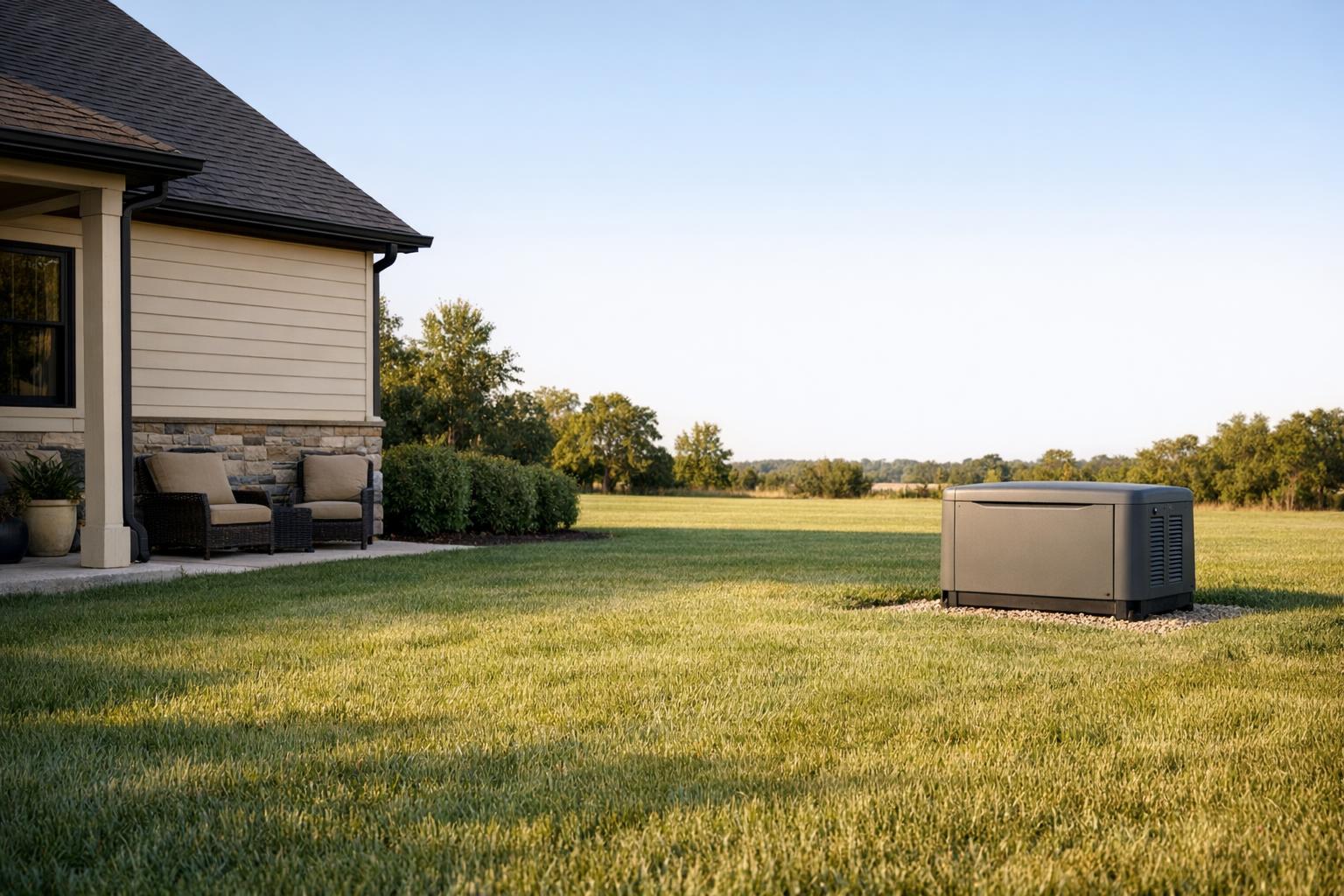
Place the unit well away from the home — CPSC guidance and manufacturer manuals frame the distance in the tens of feet, with exhaust pointed away from the building — far from doors, windows, vents and air-conditioning intakes, on dry, level ground. Your specific model’s manual states its clearances: follow the largest figure you find. Neighboring homes count too; exhaust does not respect property lines.
CO-sensing shutoff is a real buying criterion
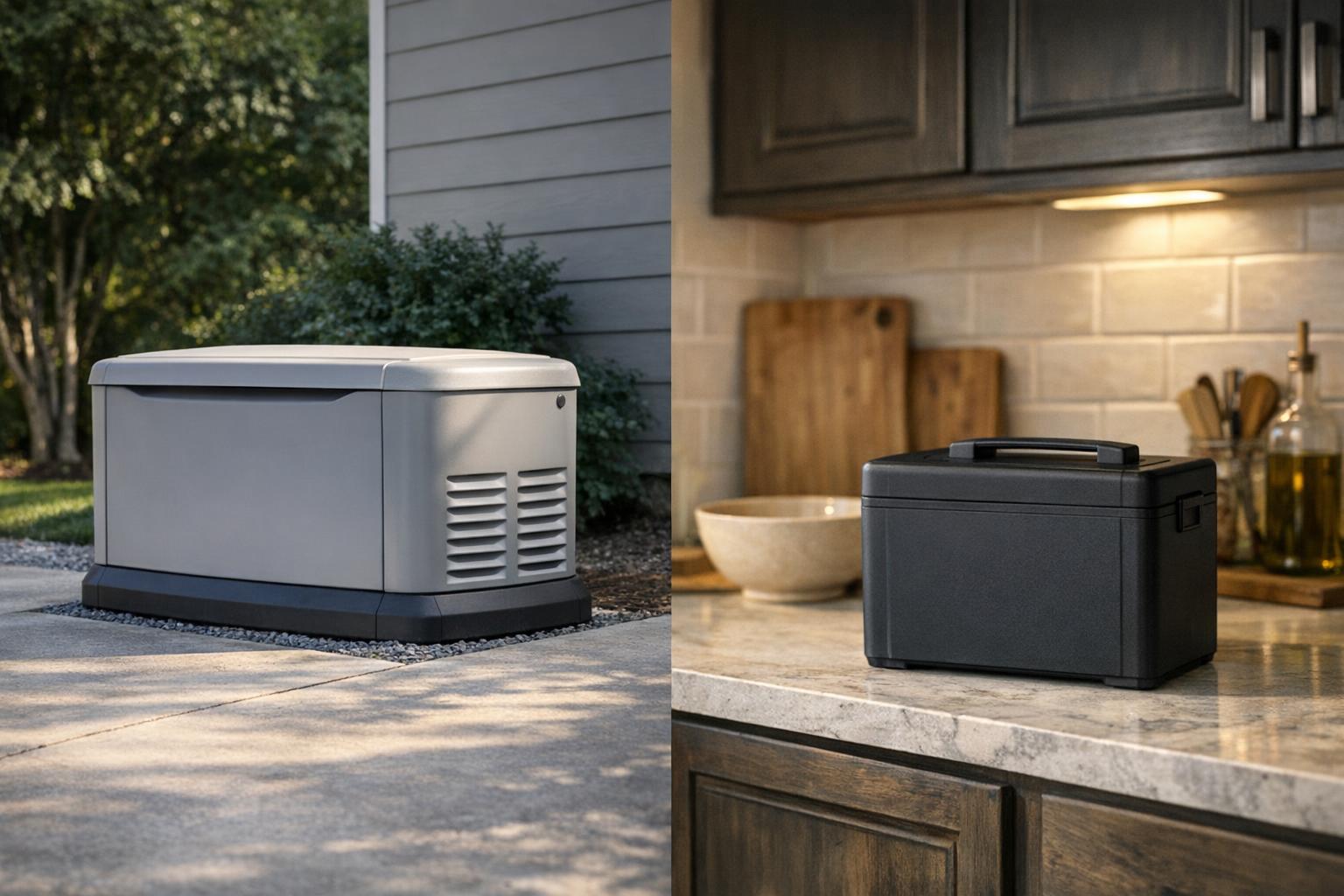
Many current generators include a CO sensor that shuts the engine down when concentrations build around the unit — marketed as CO Secure, CO Shield, CO Sense and similar, and reflected in certifications like ANSI/PGMA G300. Our catalog flags these systems when the listing documents them, and we treat them as genuinely worth prioritizing. They are a backstop, not a permission slip: the placement rules above still apply in full. If placement or fumes are a dealbreaker for your situation, the generator-versus-power-station comparison covers the fume-free alternative and its real limits.
CO alarms inside the home
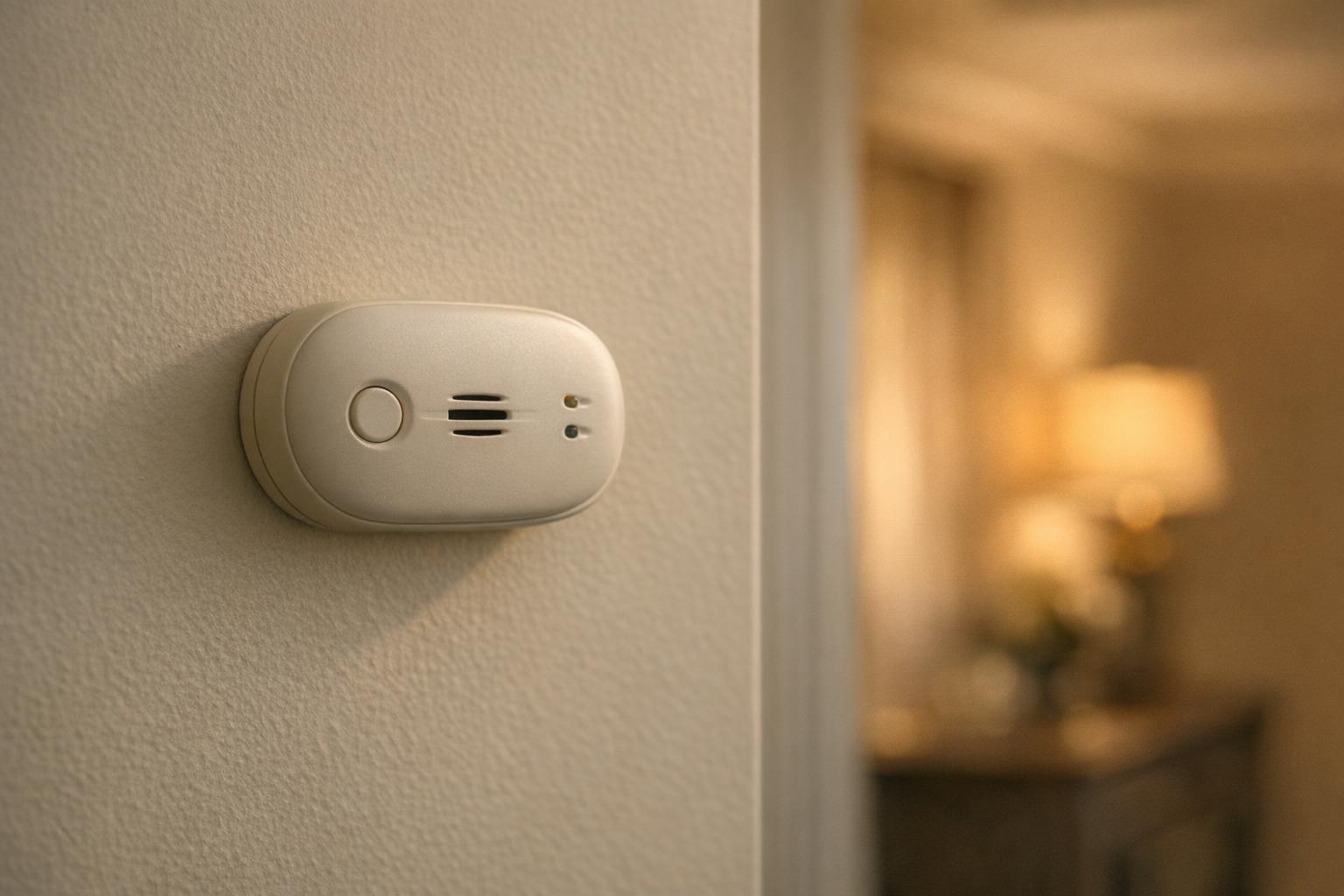
Battery-operated or battery-backed CO alarms belong on every level of the home and near sleeping areas — especially during outage operation, when the alarm may be the only warning that placement went wrong or wind shifted exhaust toward an opening. Test them when the outage kit comes out. If any CO alarm sounds, move everyone to fresh air immediately and call emergency services; do not re-enter to hunt for the source.
Weather protection without enclosure
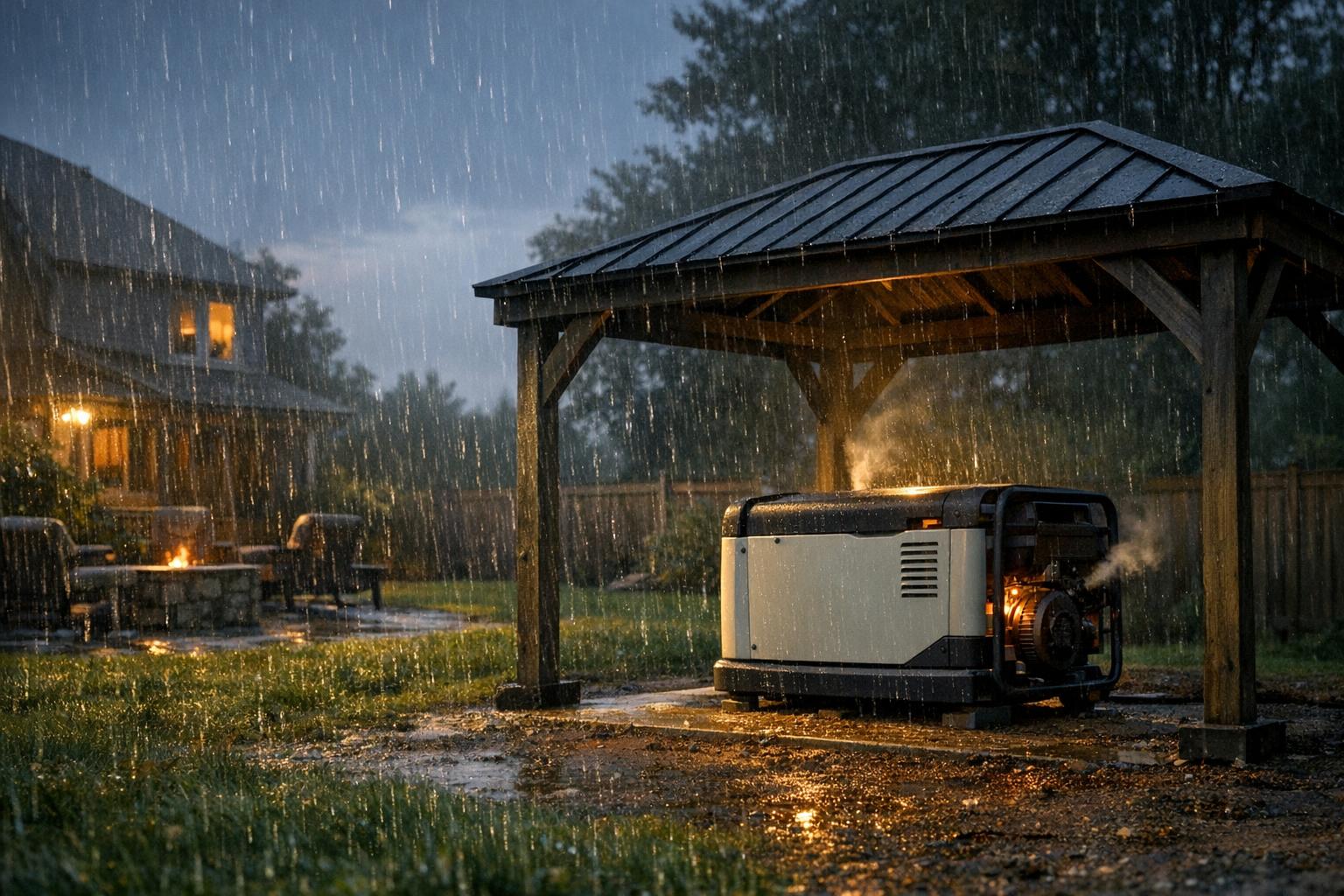
Rain pushes people toward the fatal mistake of moving the generator under cover. The safe answers are purpose-built generator canopies and open-sided covers that shed rain while leaving airflow unobstructed, used per their own instructions and the generator manual. A generator that cannot run safely in current weather is a reason to wait, not a reason to bring it closer to the building.
The placement rehearsal
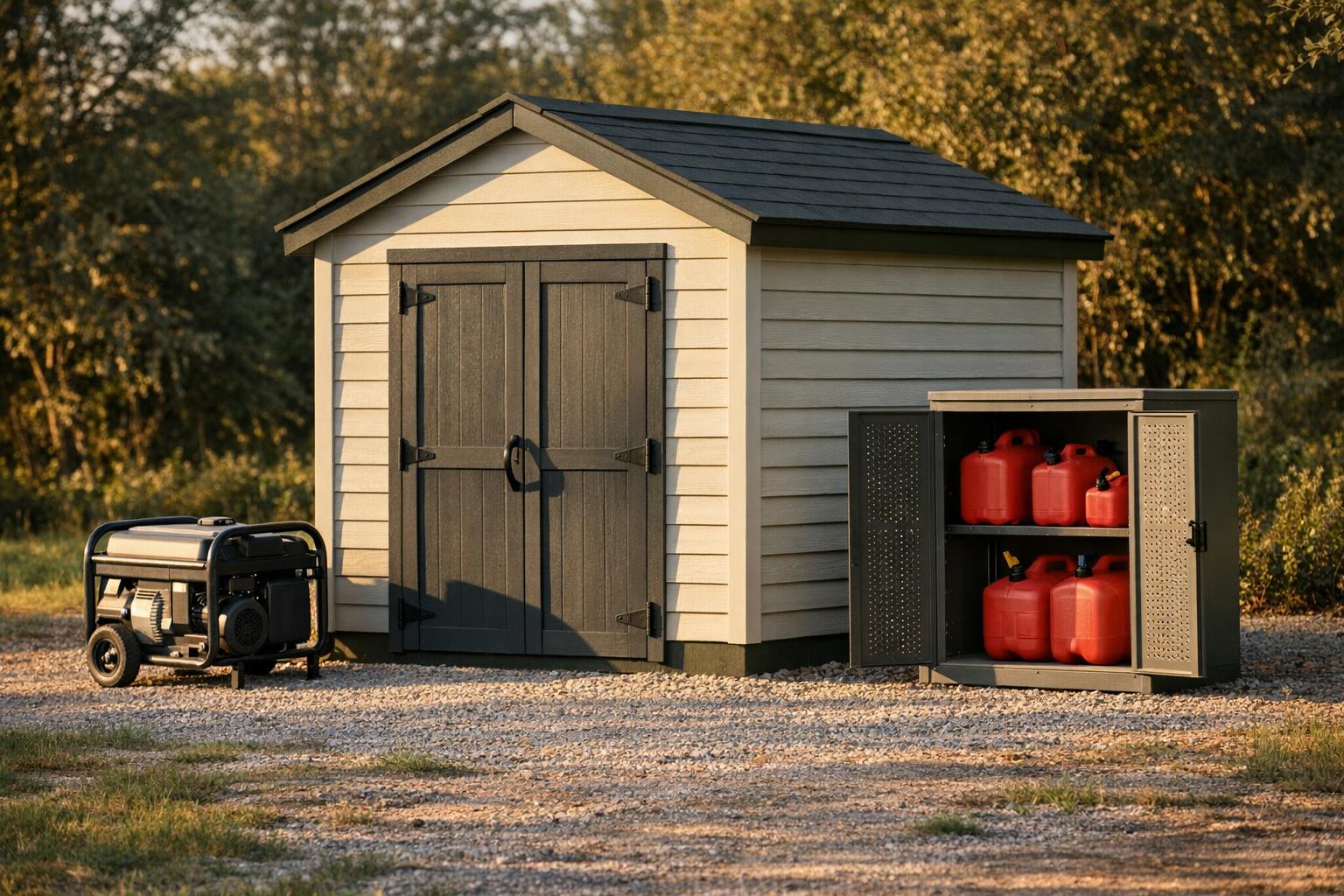
Choose the operating spot on a calm day: measure the distance, check ground and drainage, verify which windows and vents are nearby, plan the cord runs to appliances or the professionally installed inlet described in our transfer switch explainer, and walk the fuel path from our storage guide. Mark the spot mentally — or literally — so that the 2 a.m. version of you inherits a decision already made well.
Special cases that deserve extra caution
Attached garages deserve a specific warning because they feel closer to \"outdoors\" than a basement while behaving like an indoor space for CO purposes: an open garage door does not create adequate ventilation, and CO can migrate from a garage into living spaces through shared walls, ductwork and even small gaps around doors. The same applies to porches, breezeways, carports and any space with a roof and more than one wall, regardless of how open it feels while you are standing in it.
Multi-unit housing and close-set suburban lots raise a second consideration: your generator's exhaust can reach a neighbor's window even when it is safely distant from your own. If your lot does not offer the clearance your manual specifies from any structure — yours or an adjacent one — that is a sign the generator class or the connection plan needs rethinking, not a reason to place it as close as seems to work. When in doubt about a specific layout, a call to your local fire department or building department is a reasonable step before an outage, not just during one; they field these placement questions routinely and can flag a hazard you might not see on your own property.
Finally, keep the placement decision separate from convenience during bad weather. The instinct to move a generator closer to a door during a storm, to keep the extension cord shorter or to stay dry while starting it, is exactly the instinct the placement rules exist to override. Rehearsing the correct spot on a calm day, as suggested above, removes the temptation to improvise when conditions are worst.