“What size generator do I need to run my house?” has no single wattage answer, and the manufacturers who sell generators say so themselves. Generac’s sizing guide puts it directly: size around the appliances and systems you want to keep running, not square footage alone. This guide turns that idea into a method you can apply to a portable generator: the working formula Generac publishes, the wattage chart printed in a portable generator owner’s manual, and the difference between powering essentials and powering the whole house. Our step-by-step load worksheet lives in a separate guide; this one answers the house-level question.
What size generator runs a house? The short answer
Short answer The generator size you need to run a house equals the running watts of everything you want on at once plus the single largest starting surge, not a figure based on square footage. Generac publishes the formula as total kW required = sum of all running wattages + highest single starting wattage burst; a portable generator usually covers essential circuits, while whole-house coverage of central air and electric appliances generally calls for a much larger unit.
Generac’s sizing article opens with the point most buyers miss: “Most homes need a generator sized around the appliances and systems they want to keep running during an outage, not square footage alone.” It adds that two homes of the same size can differ by 8kW or more depending on heating, well pumps and other loads.
- Step 1: list the loads that must run during an outage.
- Step 2: record running watts and starting watts from each nameplate or manual.
- Step 3: add the running watts, then add the largest single starting surge (Generac’s formula).
- Step 4: compare the total with a generator’s rated (running) output, not its surge figure.
For the detailed worksheet, use our load-by-load sizing guide or the generator sizing calculator.
Why square footage is the wrong starting point
Generac explains that square footage “tells you roughly how much conditioned space your HVAC system needs to serve. It doesn’t tell you how your home is heated, how many motors need to start at the same time.” Its example: a 1,550 sq. ft. home with gas heat and one AC unit is a different electrical problem from the same size home with an electric heat pump and a well pump.
Generac groups loads into three levels, which is a practical way to decide what “run a house” means for you:
| Level | Examples Generac lists | Typical role in a portable-generator plan |
|---|---|---|
| Level 1 (must-haves) | Refrigerator and freezer, Wi-Fi router and modem, phone and laptop chargers, LED lighting, sump pump | Core of an essentials plan |
| Level 2 | Microwave, toaster oven, garage door opener, small window AC unit | Run selectively, one at a time |
| Level 3 (heavy hitters) | Central air conditioning, electric range or oven, well pump, EV charger, electric dryer | Usually beyond an essentials plan; check surge carefully |
Generac also warns that “bigger is not always better”: oversizing means overpaying at purchase and every time it runs.
Running watts, starting watts and the sizing formula
Generac defines running wattage as “the steady-state power the appliance draws during normal operation,” and starting (surge) wattage as the burst needed to start a motor, “often two to three times the running figure.” Its working formula is: total kW required = (sum of all running wattages) + (highest single starting wattage burst).
A portable generator manual shows the same idea from the generator side. The DuroMax XP12000EH manual explains that “the rated wattage corresponds to the maximum wattage the generator can output on a continuous basis,” while surge wattage is available only “for a short period of time.” It cautions: connect only devices whose rated wattage is equal to or less than the generator’s rated wattage.
| Appliance | Rated (running) watts | Additional surge watts |
|---|---|---|
| Refrigerator freezer | 800 | 1200 |
| Sump pump | 800 | 1200 |
| Furnace blower | 800 | 1300 |
| Well water pump | 1000 | 1500 |
| Window air conditioner | 1200 | 1800 |
| Microwave | 1000 | 2000 |
| Electric water heater (40 gal) | 4000 | 0 |
Illustrative example using those printed figures: refrigerator 800 + sump pump 800 + furnace blower 800 + window AC 1200 = 3,600 running watts; the largest additional surge listed among them is 1,800 W (window AC), so the formula gives 3,600 + 1,800 = 5,400 W. The manual itself says these figures “are estimates only,” so use your own nameplates. Starting vs running watts explains the surge numbers in more detail.
Essentials vs whole house: what a portable can realistically cover
Generac distinguishes “Essential Circuits”—refrigerator, lighting, well pump and a few critical outlets—from “Whole-House” coverage that keeps HVAC, kitchen appliances and high-draw systems running. Its standby examples show the scale: most 1,550 sq. ft. homes need 10kW to 18kW, and a 2,000 sq. ft. house typically needs a 20kW or 22kW unit for whole-home coverage. For central air, Generac says a 3-ton unit typically needs about 3.5kW to 5kW running but can demand 15kW to 18kW to start.
- Essentials plan: Level 1 loads plus one Level 2 load at a time; the common fit for a portable generator.
- Central air: starting demand is the obstacle; Generac pairs mid-sized units with load management or a soft start kit.
- Whole-house: Generac’s examples are standby-sized (about 20–22kW for 2,000 sq. ft.); verify against a portable’s rated output, not its peak.
- Medical devices: Generac advises factoring CPAP or oxygen concentrators in from the start and checking total harmonic distortion.
Dual fuel units often list lower output on propane than on gasoline; the DuroMax manual, for example, lists 9,500 rated watts on gasoline and 9,025 on propane. Size against the fuel you will actually use; dual fuel vs gasoline generators covers that trade-off.
Connecting a generator to the house, safely
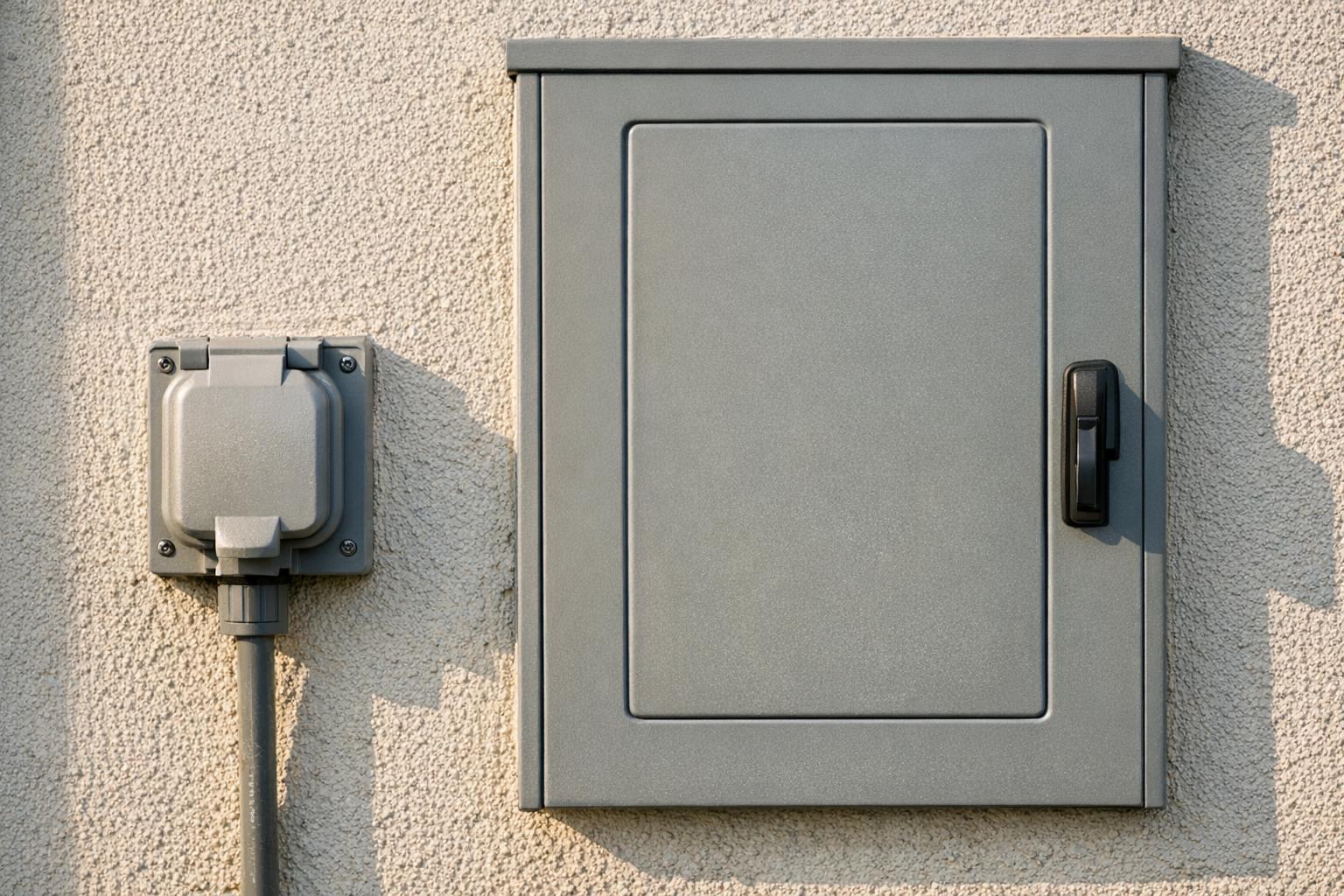
Running a house, even partially, raises the question of how power reaches the circuits. The CPSC is explicit: “NEVER try to power the house wiring by plugging the generator into a wall outlet, a practice known as ‘backfeeding.’” It presents an electrocution risk to utility workers and neighbors on the same transformer. Any connection to house wiring—transfer switch or interlock with an inlet—must be installed by a licensed electrician under a local permit and inspection; never plug a generator into a wall outlet.
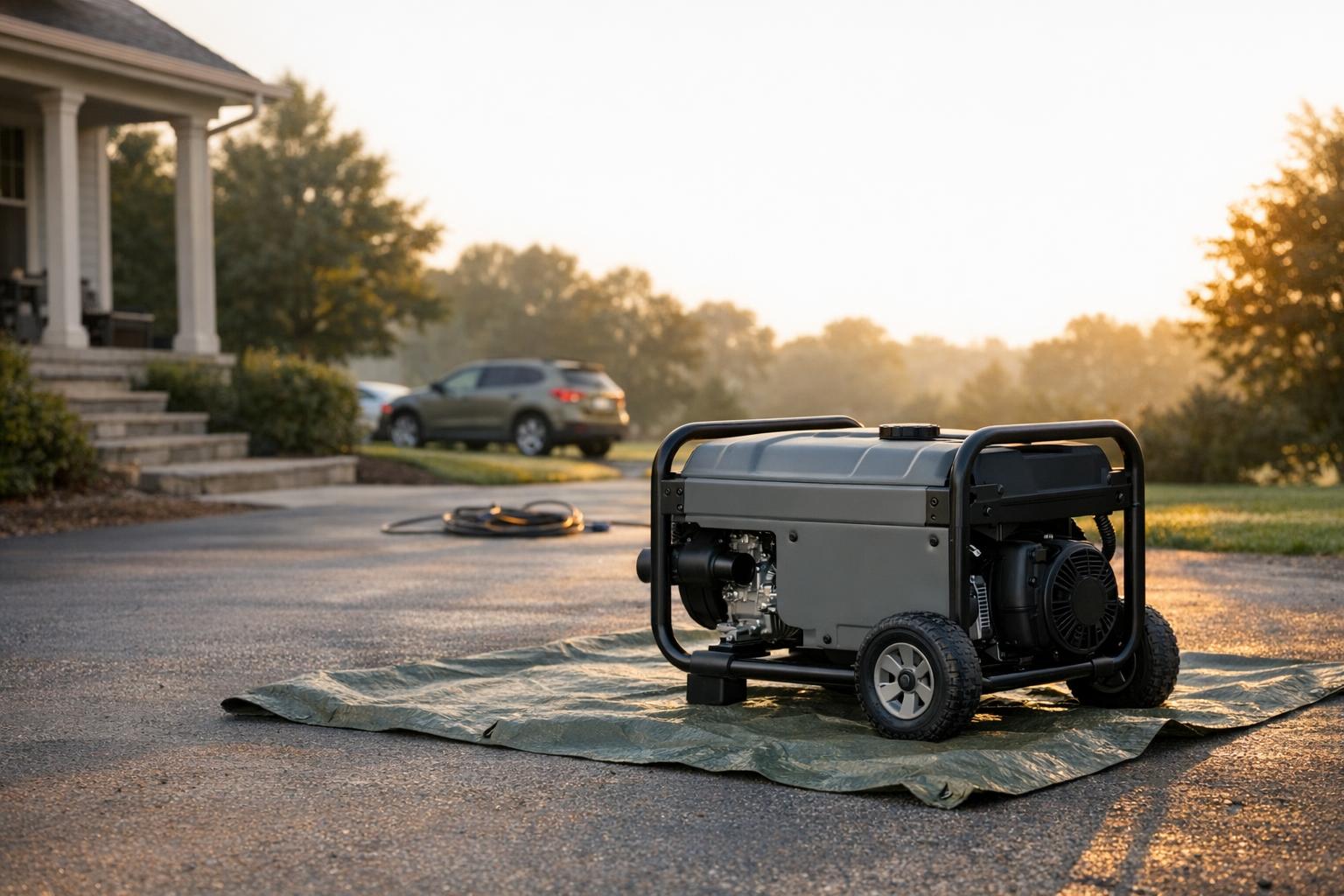
The options are extension cords to individual appliances, a transfer switch or an interlock kit; the last two are compared in our transfer switch explainer. Placement is non-negotiable: the CPSC says to operate a portable generator outside only, at least 20 feet from the house, with the exhaust directed away from the home, and never inside a home, garage, basement, crawlspace, shed or on a porch.
- Cords: heavy-duty outdoor cords rated above the connected load (CPSC).
- Transfer switch or interlock: licensed electrician, permit and inspection.
- CO alarms: battery-operated or battery-backup CO alarms in the home (CPSC).
From a wattage target to a shortlist
Once you have a running-watt total and a surge figure, compare them with each candidate’s rated output on the fuel you plan to use, and keep headroom for appliances you forgot. Generac’s own advice for its standby customers is to have a professional complete a load analysis; for a portable, a licensed electrician who installs your connection can confirm which circuits are realistic.
Our best dual fuel generators for home backup ranking compares documented running and peak watts; for smaller essentials plans, see the under-10,000-watt ranking. Then turn the target into an outage power plan with fuel, placement and roles.