
PowerSmart 4,400W Dual Fuel Inverter
6.8Good · out of 10$389.99 Price on Sep 30, 2026 · may have changed- Stated: Gasoline
- Inverter generators
Product images: Amazon listings
Written from the listing's specs, not from our own use · How we rate
The PowerSmart 4,400W Dual Fuel Inverter packs an inverter engine that idles down at light load, a built-in CO sensor and up to 11 hours on a 1.6-gallon tank at 25 % load into one inverter generator. Think of it for quiet nights during a long outage: 6.8/10 on what its listing documents.
| Brand | PowerSmart |
|---|---|
| Category | Inverter generators |
| Listed fuels | gasoline |
| Stated runtime | Up to 11 hours at 25 % load |
| Fuel tank | 1.6 gallons |
| Stated noise | 76 dB |
| CO sensor | Stated in the listing |
| Engine | 223 cc |
| ASIN | B0FLPWKR3F |
Full listing title: PowerSmart 4400-Watt Dual Fuel Portable Inverter Generator, PowerSmart Gas Powered, CO-Sensor, Lightweight & Quiet for Home Use and Emergency Backup, Camping, EPA Compliant, Black
Rated from the listing's specs, no buyer reviews yet
What it's made for: quiet nights during a long outage.

Two generators close to it on our rating, each with a dated price.


What it has going for it
Inverter. The engine speeds up and slows down with the load, so it is quieter and thriftier at 3 a.m. when only the fridge and a lamp are on. The clean sine wave is kinder to laptops, TVs and the furnace control board.
CO sensor. A sensor that watches the carbon monoxide around the unit, per the listing. Treat it as a backup: the generator still belongs outside, about 20 ft from doors and windows.
11 h runtime, 1.6 gal. That is at 25 % load, per the listing. Put the fridge, the furnace fan and the sump pump on it and the hours drop, so plan fuel for the overnight stretch: stabilised cans or a spare 20 lb propane tank.
What the PowerSmart 4,400W Dual Fuel Inverter listing names:
The manual has the last word on fuel, oil and the outlet ratings; read it before the first start.

The button opens the exact listing (ASIN B0FLPWKR3F), where today's price, stock and seller apply.
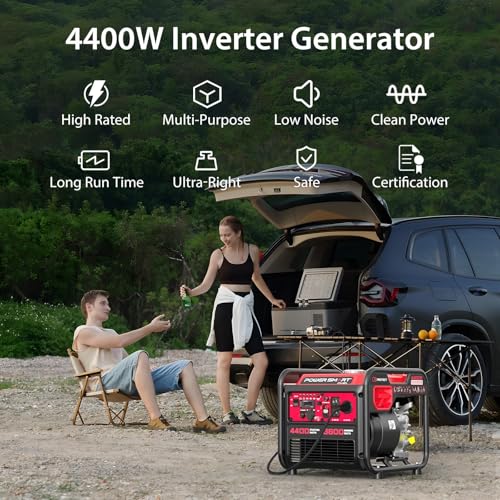
Our take
The PowerSmart 4,400W Dual Fuel Inverter earns its place with an inverter engine that idles down at light load and a built-in CO sensor. No buyer reviews yet, so this PowerSmart inverter generator has to win you over on paper. The catch with the PowerSmart: gasoline only, while most picks here also burn propane. We'd pick it if laptops, TVs or a furnace board will be plugged in; otherwise, put it next to the Champion 10,000W Tri Fuel Open Frame first.
Fill it with oil before the first start, then run it for a few minutes outside with a small load.
Pull the cord, let it warm up, then add loads one at a time, the biggest motor first. Keep stabilised cans ready, never refuel it hot. The 11 hours on the listing are at a light load; plan a refill at night.
Run it every month or so for 20 minutes. Add stabiliser or run the carburetor dry before storage. Our maintenance schedule has the full list.
First oil change after the break-in hours in the manual, then on schedule. Air filter and spark plug once a season, and a cover for the months it sits.
Before the PowerSmart 4,400W Dual Fuel Inverter goes in your cart, check the running watts: the listing we read gives no clear wattage, so ask for the running figure before you size anything against it.
Write down what has to run at the same time, add the biggest motor surge (well pump, sump pump, AC), and let our sizing calculator do the sums.
Plan on heavy-duty extension cords to the appliances, or ask an electrician which inlet and switch would match its outlets. Our interlock vs transfer switch guide compares the two routes.
Outside only, about 20 ft from doors, windows and vents, exhaust pointing away (the CO sensor is a backup, not a permission). Pick the spot now, before the storm. Our CO safety and placement guide has the details.
Gasoline goes stale in a few months: stabiliser, a dry place for the cans, and a run every month or so keep it ready. Our fuel storage guide and maintenance schedule cover both.
How the PowerSmart 4,400W Dual Fuel Inverter stacks up against the closest alternative, the Champion 10,000W Tri Fuel Open Frame.
| Criterion | PowerSmart 4,400W Dual Fuel Inverter | Champion 10,000W Tri Fuel Open Frame |
|---|---|---|
| Our rating | 6.8/10 | 6.8/10 |
| Fuels | Gasoline | Gas, propane, natural gas |
| CO sensor | Stated | Not stated |
| Start | Not stated | Electric |
| Runtime | 11 h at 25 % | Not stated |
Both score 6.8/10. The Champion 10,000W Tri Fuel Open Frame adds natural gas as a third fuel and electric start, while the PowerSmart 4,400W Dual Fuel Inverter brings a CO sensor and a longer stated runtime (11 h).
We rate it 6.8/10 (good). The rating comes from its documented listing alone, as no customer-review record is captured yet.
The listing names gasoline. Run it outdoors only, away from doors, windows and vents.
Its listing states clean inverter power, a built-in CO sensor and up to 11 hours on a 1.6-gallon tank at 25 % load. These are the seller's figures, not our measurements: how loud it is in your driveway and how it handles your well pump's surge can't be read from a listing.
Your load list: write down what has to run at the same time, add the biggest motor surge (well pump, sump pump, AC), and let our sizing calculator do the sums. How it reaches the house: plan on heavy-duty extension cords to the appliances, or ask an electrician which inlet and switch would match its outlets. Our interlock vs transfer switch guide compares the two routes. Where it will run: outside only, about 20 ft from doors, windows and vents, exhaust pointing away (the CO sensor is a backup, not a permission). Pick the spot now, before the storm. Our CO safety and placement guide has the details. Fuel and storage: gasoline goes stale in a few months: stabiliser, a dry place for the cans, and a run every month or so keep it ready. Our fuel storage guide and maintenance schedule cover both.
We link to the exact listing on Amazon, where today's price, stock and seller apply. It is an affiliate link, and it has no effect on the rating.
No, we haven't used it ourselves. Everything on this page comes from its listing, read line by line and weighed with our published formula, plus our editors' read of how it compares with its rivals.