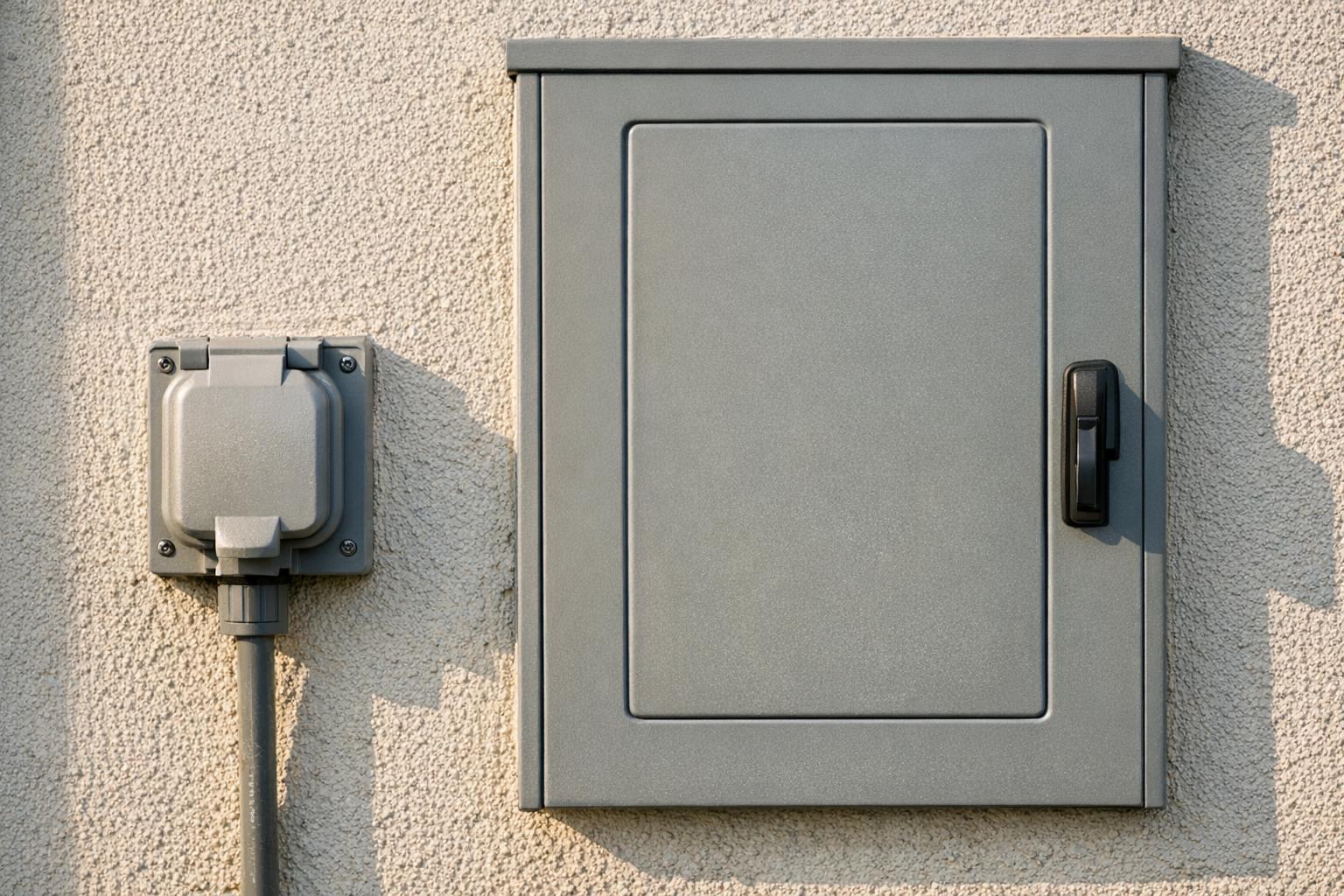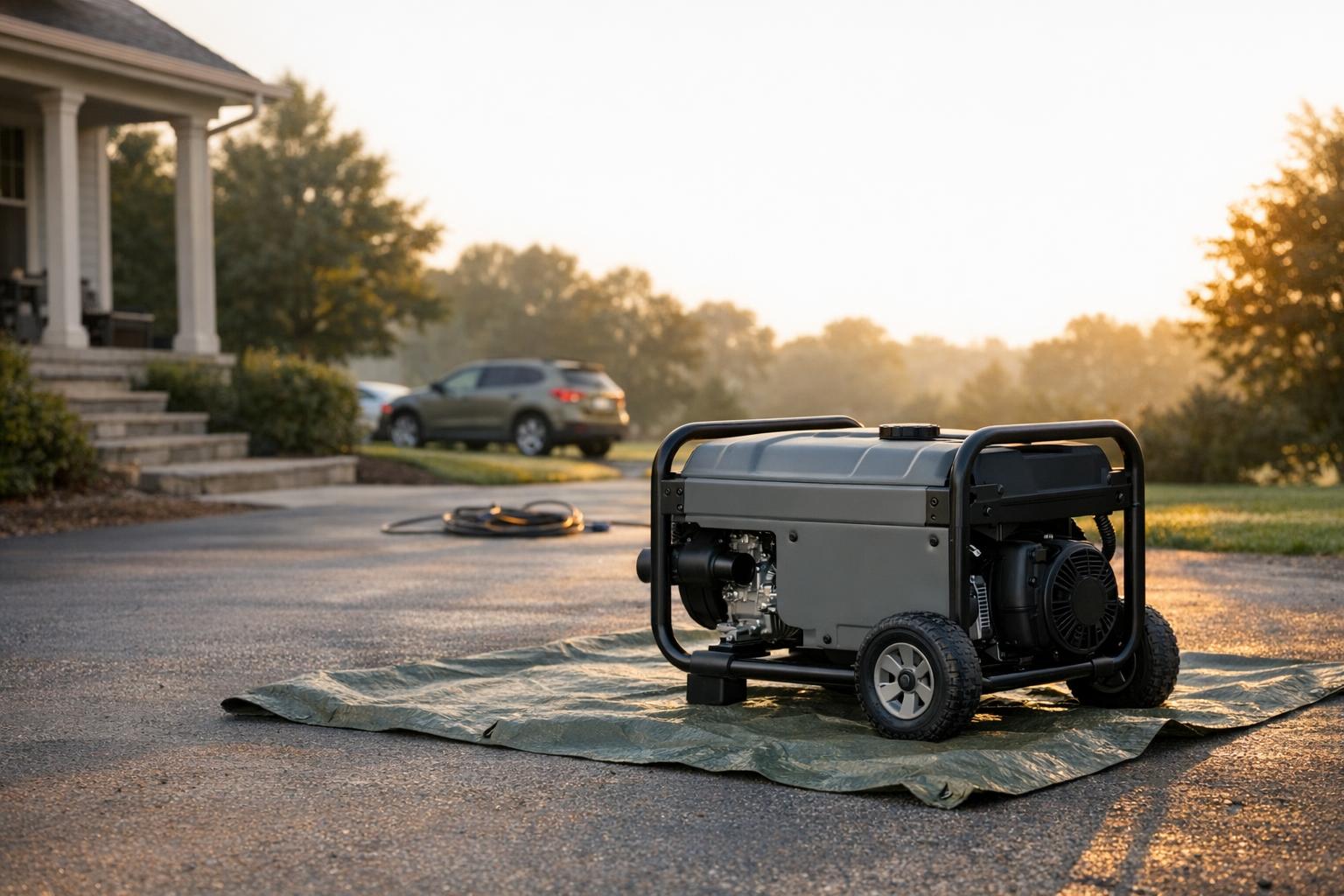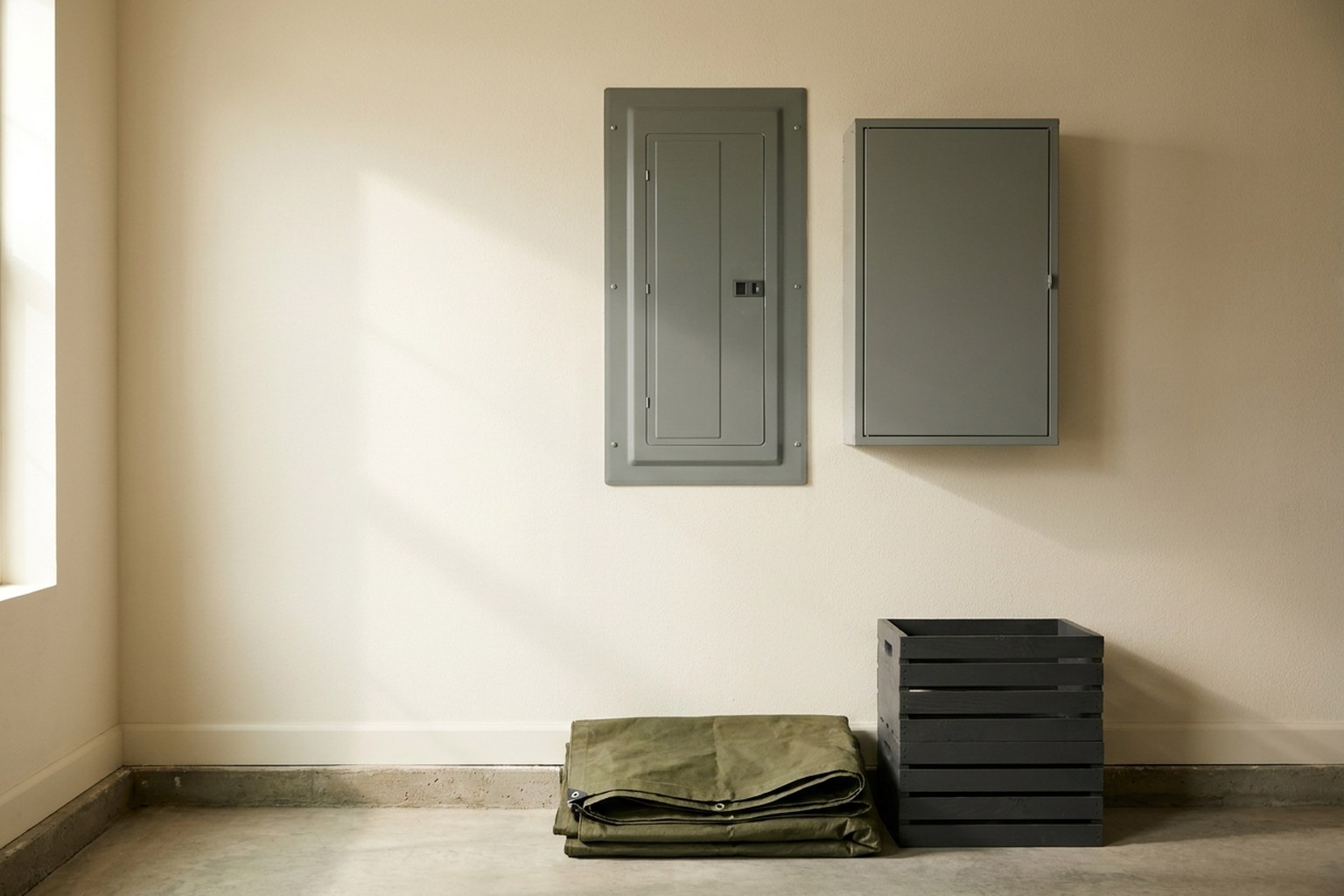
If you want a portable generator to power circuits in your home rather than individual extension cords, there are two common code-recognized routes: a transfer switch or a breaker-panel interlock kit fed through a power inlet. Both exist to solve the same problem—keeping generator power from flowing back into utility lines—but they differ in which circuits you can use and how you operate them during an outage. This comparison relies on generator owner’s manuals, an interlock manufacturer, a panel maker and the CPSC. It explains the choice; it does not describe installation, which belongs to a licensed electrician working under a local permit.
Interlock kit or transfer switch? The short answer
Short answer A generator interlock kit and a transfer switch both prevent utility power and generator power from being connected at the same time, which protects line workers from backfeed. An interlock kit mounts on the existing breaker panel and lets you choose any circuit within the generator’s capacity; a transfer switch powers only the circuits wired to it. Either one must be installed by a licensed electrician with a permit and inspection.
Eaton, a panel manufacturer, describes its mechanical interlock kit as a device that “helps to prevent the utility and backup generator supplies from being on at the same time,” protecting utility linemen “from dangerous generator backfeed.” Generac’s portable generator manual states that when connecting to a building system, “a transfer switch must isolate the generator power from the utility power at all times.”
- Shared purpose: utility and generator never connected simultaneously.
- Interlock kit: panel-specific plate; choose circuits at the panel.
- Transfer switch: pre-selected circuits; switching done at the switch.
- Both: licensed electrician, permit, inspection.
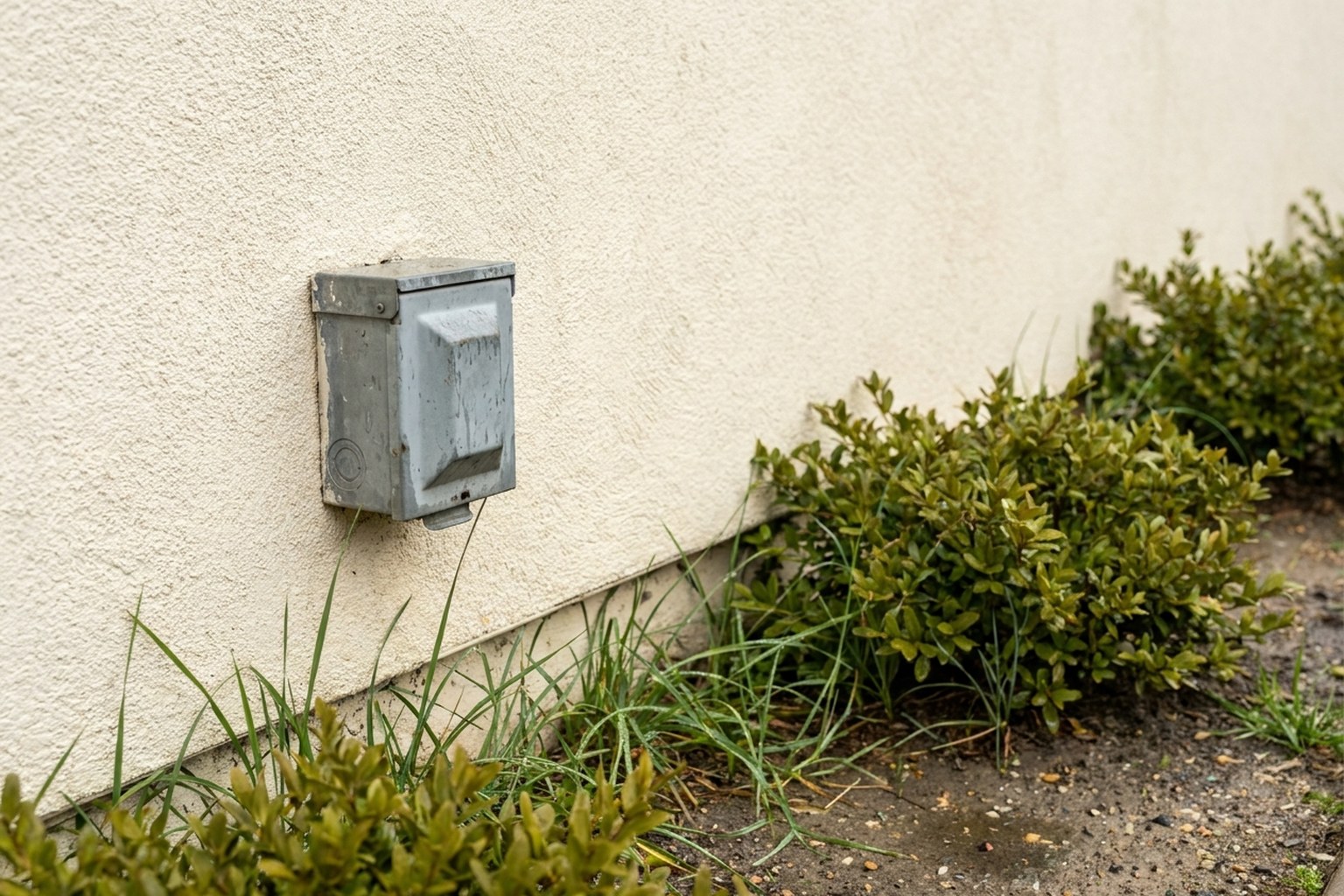
Why a dedicated connection is required at all
Every generator manual we reviewed treats the house connection as electrician work. Honda’s EU2200i manual: “Connections for standby power to a building’s electrical system must be made by a qualified electrician. The connection must isolate the generator power from utility power, and must comply with all applicable laws and electrical codes.” It warns that improper connections can allow current to backfeed into utility lines, which “may electrocute utility company workers,” and that the generator “may explode, burn, or cause fires when utility power is restored.”
The CPSC adds the household rule: never power house wiring by plugging the generator into a wall outlet. OSHA’s portable generator fact sheet says never to attach a generator directly to a structure’s electrical system unless it has a properly installed transfer switch. Our transfer switches explainer covers the backfeed danger in more depth.
How an interlock kit works
GenInterlock, an interlock maker, describes the device as “a mechanical safety device that mounts to the front cover of a residential breaker panel,” with plates that slide to block either the main utility breaker or the generator breaker, “but never allowing both to be in the on position simultaneously.” Kits are panel-specific: a kit for one brand’s panel “will not fit another’s, even if both carry the same amp rating.”
The same source states that properly installed by a licensed electrician using a listed kit, an interlock is a code-compliant method under NEC Article 702, and that some local jurisdictions may have additional requirements, so the authority having jurisdiction should be checked. Power reaches the panel through an exterior power inlet and a generator cord matched to the generator’s plug.
- Mounts on: the existing panel cover; no separate transfer panel (GenInterlock).
- Circuits available: all circuits in the panel, limited by generator output (GenInterlock).
- Listing: UL- or MET-listed kits matter where the permit office requires a listed product (GenInterlock).
- Operation: manual: you shed and restore breakers yourself.
How a transfer switch works
A transfer switch is a separate device wired to selected circuits. The DuroMax XP12000EH manual summarizes it as “the safest, most effortless way to power your home,” noting it “requires an electrician to install” and that once you choose which circuits to power, “you’re locked into your configuration.” Generac’s portable manual adds a technical point for its units: where the generator connects to a manual transfer switch, the switch must also switch the neutral (3-pole) to be NEC code compliant—an example of why the electrician must read the generator manual too.
| Question | Interlock kit + inlet | Transfer switch |
|---|---|---|
| Prevents backfeed | Yes—main and generator breaker cannot both be on (Eaton, GenInterlock) | Yes—isolates generator from utility (Generac, Honda) |
| Circuits available | Any panel circuit, within generator output (GenInterlock) | Only pre-wired circuits (DuroMax) |
| Flexibility | Switch circuits as needs change (DuroMax) | Locked into chosen configuration (DuroMax) |
| Overload management | Owner sheds loads; some electrical knowledge needed (DuroMax) | Limited to selected circuits |
| Installation | Electrician (DuroMax, GenInterlock) | Electrician (DuroMax, Generac, Honda) |
What to prepare before calling the electrician
Whichever device you lean toward, the electrician will need facts about the generator and the panel. Collecting them in advance keeps the quote accurate and avoids buying an interlock that does not fit.
- Panel details: manufacturer, model and main breaker rating, which GenInterlock says determine the correct kit.
- Generator outlet: the receptacle type and rated output from the owner’s manual.
- Circuit list: the circuits you want during an outage, ranked by priority.
- Local rules: permit requirements and any utility registration rule in your area (Honda).
Bring the generator’s owner’s manual too: as Generac’s neutral-switching note shows, the connection details depend on the generator as well as on the house.
Choosing between them
The choice usually comes down to how much flexibility you want versus how simple outage-day operation should be. DuroMax’s manual frames the interlock as more hands-on: you choose circuits, but “some electrical knowledge is needed so you don’t overload the generator.” A transfer switch limits you to pre-selected circuits but makes the routine simpler.
- Prefer an interlock: when you want any circuit available and are comfortable managing loads within the generator’s rating.
- Prefer a transfer switch: when a fixed set of essential circuits and a simpler routine suit the household.
- Either way: size the generator first; see sizing a generator for home backup.
- Ask the electrician: whether your panel has a listed interlock and what the local permit office requires.
Some manufacturers advertise models as “transfer switch ready”; that describes the generator’s outlet, not the house side. Compare models on the home backup generator ranking.
Safety rules that apply to both
Placement is non-negotiable: the CPSC says to operate a portable generator outside only, at least 20 feet from the house, with the exhaust directed away from the home, and never inside a home, garage, basement, crawlspace, shed or on a porch. FEMA’s Ready.gov adds that generators should be used at least 20 feet from windows, doors and attached garages, and that CO detectors should be installed on every level of the home.
- Never backfeed: no outlet-to-outlet cords (CPSC).
- Outdoors only: 20+ feet from the house, exhaust away (CPSC, Ready.gov).
- Keep it dry: touching a wet generator can cause shock (Ready.gov).
- Refuel cool: let it cool before refueling (Ready.gov).
- Utility registration: some areas require generators to be registered with the utility (Honda).
Placement details are in our carbon monoxide placement guide, and the rest of the outage routine in the home outage power plan.
Sources and further reading
- Eaton — Mechanical interlock kits for backup power
- GenInterlock — Generator Interlock Kit vs. Transfer Switch (manufacturer explainer)
- Honda EU2200i generator owner’s manual (PDF)
- Generac GP Series portable generator owner’s manual (PDF)
- DuroMax XP12000EH owner’s manual (PDF): wattage chart, run time and home-connection options
- CPSC — Portable Generator Hazards safety alert (PDF)
- OSHA — Portable Generator Safety fact sheet
- Ready.gov (FEMA) — Power Outages