
Pulsar 13,000W Tri Fuel
7.4Good · out of 10See current price ↗- Stated: 10,200 W running · 13,000 W peak · Gasoline, Propane, Natural gas
- Dual fuel generators
Product images: Amazon listings
Written from the listing's specs, not from our own use · How we rate
10,200 running and 13,000 peak watts, gasoline, propane and natural gas on one panel and a 50 amp outlet for an inlet box or an RV: the Pulsar 13,000W Tri Fuel covers what matters most in a generator. Think of it for whole-house backup on three fuels: 7.4/10 on what its listing documents.
| Brand | Pulsar |
|---|---|
| Category | Dual fuel generators |
| Running output | 10200 W |
| Peak output | 13000 W |
| Listed fuels | gasoline, natural gas, propane |
| Stated runtime | Up to 7.5 hours at 50 % load |
| Fuel tank | 8 gallons |
| CO sensor | Stated in the listing |
| Transfer switch ready | Stated in the listing |
| Outlets named in the listing | 50 A (14-50R), L14-30R, GFCI household |
| ASIN | B0DY1YTRD4 |
Full listing title: Pulsar 13,000-Watt Tri Fuel Gasoline, Propane, Natural Gas, Portable Generator with Remote Start
| Running output | Exact listing |
|---|---|
| Peak output | Exact listing |
Rated from the listing's specs, no buyer reviews yet
What it's made for: whole-house backup on three fuels.

Two generators that are also open frames, of about the same size, closest to it on our rating, each with a dated price.

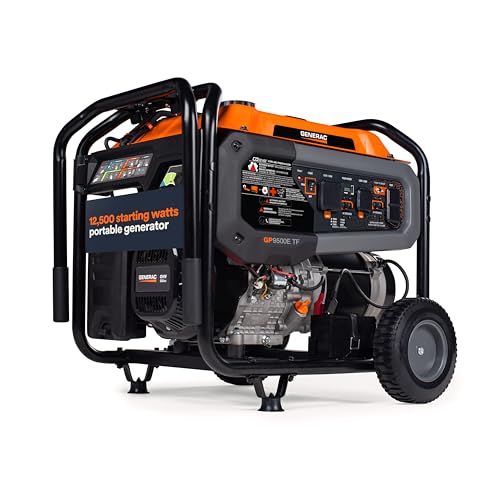
That's the running figure the listing states, on gasoline. Enough, on paper, for the fridge, the chest freezer and the sump pump at once, with the furnace or the well pump on top once a transfer switch is in. Hold the well pump's start-up surge against the peak before you count on it.
What it has going for it
Three fuels. Natural gas from the house line means no refuelling at 2 a.m., and it is also the lowest-output fuel of the three. The hookup is a job for a licensed gas fitter, not a hose and a guess.
50 amp outlet. The big plug that feeds a 50 amp inlet box, a transfer switch or a 50 amp RV. One cord carries both legs of 240 V, which is how the well pump and the furnace get power without extension cords through a window.
Extension cords: the cheapest start. The fridge, the freezer and a lamp plug into the 120 V outlets (GFCI-protected, per the listing); the furnace, the well pump and the water heater stay dark.
A transfer switch: the listing names an L14-30R twist-lock and a 50 amp outlet. With an inlet box and a transfer switch or interlock wired by an electrician, one cord feeds the panel, furnace and well pump included. Book that visit before storm season, not during the outage.
The seller states, word for word, in the Pulsar 13,000W Tri Fuel listing:
Runs on gasoline, propane, or natural gas for maximum versatility.
Provides up to 7.5 hours of runtime at half load (gasoline).
Remote, electric, and recoil start for added convenience.
(4) 120V GFCI outlets, (1) 120/240V L14-30R outlet, (1) 120/240V L14-50R outlet, and (1) 12V DC output for battery charging.
Powder-coated steel frame, 12” never-flat wheels, and fold-down handles.
The seller's claims, quoted as written; we haven't measured any of it. The noise on your driveway and the surge of your well pump are things you only find out at home.

What the Pulsar 13,000W Tri Fuel listing names:
In the box, per the listing: A wheel kit, A starter battery.
The manual for the Pulsar 13,000W Tri Fuel has the final word on fuel, oil and outlet ratings.

We have no recent price on file for this listing, so we don't print an old one.
Count the hookup in the budget too: a heavy cord, an inlet box and a transfer switch or interlock, wired by an electrician, are a separate bill.
The button opens the exact listing (ASIN B0DY1YTRD4), where today's price, stock and seller apply.

Want it quieter, or cleaner power for electronics? The Champion 11,000W Dual Fuel Inverter (7.8/10) is an inverter, per its listing.
Want a CO shutoff? The WEN 14,500W Tri-Fuel, CO Watchdog (7.8/10) names a CO sensor that shuts the engine off.
Well pump or central air on the list? The Westinghouse 18,000W Dual Fuel (7.8/10) is rated 14,500 running watts.
Our take
The Pulsar 13,000W Tri Fuel earns its place with 10,200 running and 13,000 peak watts and gasoline, propane and natural gas on one panel. No buyer reviews yet, so this Pulsar generator has to win you over on paper. The catch with the Pulsar: no word on the propane rating. We'd pick it if you want most of the house running, not just the fridge; otherwise, put it next to the Champion 11,500W Dual Fuel first.
Fill it with oil before the first start, then run it for a few minutes outside with a small load. Fit the wheel kit first; it is easier on the ground.
Start it with the fob, let it warm up, then add loads one at a time, the biggest motor first. Propane or gas: decide before the storm and have the hose and the tank ready. The 7.5 hours on the listing are at a light load; plan a refill at night.
Run it every month or so for 20 minutes and keep the battery charged. On propane you avoid stale gas in the carburetor; on gas, add stabiliser or run it dry before storage. Our maintenance schedule has the full list.
First oil change after the break-in hours in the manual (the hour meter counts them), then on schedule. Air filter and spark plug once a season, and a cover for the months it sits.
Before the Pulsar 13,000W Tri Fuel ships, check your hookup: 10,200 running watts are only useful through an inlet box and a transfer switch or interlock, so price in the electrician.
10,200 running watts and 13,000 at start-up, per the listing. Write down what has to run at the same time, add the biggest motor surge (well pump, sump pump, AC), and let our sizing calculator do the sums.
Ask an electrician to quote an inlet box plus a transfer switch or an interlock before you buy, so the total is no surprise. Our interlock vs transfer switch guide compares the two.
Outside only, about 20 ft from doors, windows and vents, exhaust pointing away (the CO sensor is a backup, not a permission). Pick the spot now, before the storm. Our CO safety and placement guide has the details.
Gasoline goes stale in a few months without stabiliser; propane keeps. Check the propane rating in the manual if propane is your plan. Our fuel storage guide covers storage.
How the Pulsar 13,000W Tri Fuel stacks up against the closest alternative, the Champion 11,500W Dual Fuel.
| Criterion | Pulsar 13,000W Tri Fuel | Champion 11,500W Dual Fuel |
|---|---|---|
| Our rating | 7.4/10 | 7.4/10 |
| Running watts | 10,200 W | 9,200 W |
| Peak watts | 13,000 W | 11,500 W |
| Fuels | Gas, propane, natural gas | Gas, propane |
| 50 amp outlet | Stated | Not stated |
Both score 7.4/10. The Pulsar 13,000W Tri Fuel brings more running watts (10,200 W) and a higher peak (13,000 W), so it has the edge on paper.
We rate it 7.4/10 (good). The rating comes from its documented listing alone, as no customer-review record is captured yet.
The listing or manual states 10,200 W running and 13,000 W peak, usually for gasoline. Size your load list against the running watts and keep the peak for motor starts; propane and natural gas ratings are lower. These are the seller's figures, not our measurements (our sizing calculator turns your loads into a running and peak pair).
The listing names gasoline, propane and natural gas. Output differs by fuel, so check the per-fuel running watts in the manual and whether the hoses you need come in the box. Run it outdoors only, away from doors, windows and vents.
Its listing states 10,200 running watts (13,000 at start-up), gasoline, propane and natural gas on one panel, a 50 amp outlet for an inlet box or an RV, a built-in CO sensor, remote start from a key fob and up to 7.5 hours on a 8-gallon tank at 50 % load. These are the seller's figures, not our measurements: how loud it is in your driveway and how it handles your well pump's surge can't be read from a listing.
Your load list: 10,200 running watts and 13,000 at start-up, per the listing. Write down what has to run at the same time, add the biggest motor surge (well pump, sump pump, AC), and let our sizing calculator do the sums. How it reaches the house: ask an electrician to quote an inlet box plus a transfer switch or an interlock before you buy, so the total is no surprise. Our interlock vs transfer switch guide compares the two. Where it will run: outside only, about 20 ft from doors, windows and vents, exhaust pointing away (the CO sensor is a backup, not a permission). Pick the spot now, before the storm. Our CO safety and placement guide has the details. Fuel for three days: gasoline goes stale in a few months without stabiliser; propane keeps. Check the propane rating in the manual if propane is your plan. Our fuel storage guide covers storage.
We link to the exact listing on Amazon, where today's price, stock and seller apply. It is an affiliate link, and it has no effect on the rating.
No, we haven't used it ourselves. Everything on this page comes from its listing, read line by line and weighed with our published formula, plus our editors' read of how it compares with its rivals.