
Generac 4,500W Gas
6.8Good · out of 10$549 Price on Sep 30, 2026 · may have changed- Stated: 3,600 W running · 4,500 W peak · Gasoline
- Gas-only generators
Product images: Amazon listings
Written from the listing's specs, not from our own use · How we rate
If you're after 3,600 running watts (4,500 at start-up), the Generac 4,500W Gas delivers, with automatic CO shutoff on top. It makes most sense for keeping the fridge and the sump pump running; we rate it 6.8/10 from its listing.
These are sold as variants of one listing family. Each variant has its own page.
| Brand | Generac |
|---|---|
| Category | Gas-only generators |
| Running output | 3600 W |
| Peak output | 4500 W |
| Listed fuels | gasoline |
| CO sensor | Stated, with automatic shutoff |
| ASIN | B0GP2JFDMZ |
Full listing title: Generac 4,500 Starting Watt Portable Gas Generator, Wheels & Handle Kit
| Running output | Exact listing |
|---|---|
| Peak output | Exact listing |
Rated from the listing's specs, no buyer reviews yet
What it's made for: keeping the fridge and the sump pump running.

Two generators that are also open frames, of about the same size, closest to it on our rating, each with a dated price.
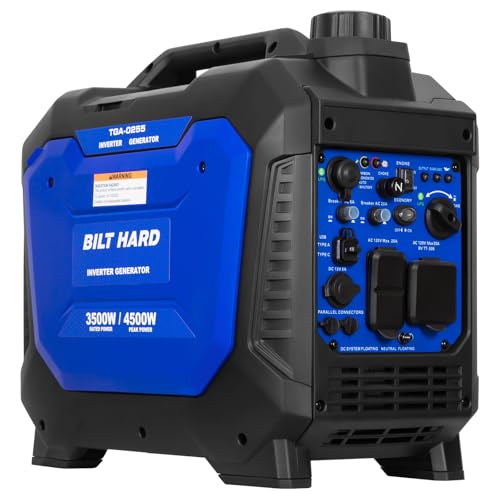

That's the running figure the listing states. Room for the fridge, a few lamps, the router and the phones, as long as the coffee maker waits its turn. Central air and a 240 V well pump are out of its league.
What it has going for it
CO shutoff. It watches for carbon monoxide building up around the unit and shuts the engine off, per the listing. A backup only: the generator still runs outside, about 20 ft from the house, exhaust pointing away.
Fuel gauge. You see what is left without unscrewing the cap in the dark.
At the campsite: it's an open frame, so expect more noise than an inverter. Check the campground's generator hours before you pack it.
On outage night: 3,600 running watts keep the fridge cold and the lights and the Wi-Fi on, with the big draws taking turns. Central air and a 240 V well pump need more.
What the Generac 4,500W Gas listing names:
The manual for the Generac 4,500W Gas has the final word on fuel, oil and outlet ratings.

At the price on Sep 30, 2026, each 1,000 running watts works out at about $152.50 (price ÷ stated running watts, our arithmetic). That puts it in the cheaper third of the 33 generators up to 4,000 running watts we have a price and a stated running figure for.
The first fill of oil, a fuel can and a bottle of stabilizer are extra.
The button opens the exact listing (ASIN B0GP2JFDMZ), where today's price, stock and seller apply. Sizes and variants of the same family often sit at different prices.

Want it quieter, or cleaner power for electronics? The Westinghouse 5,000W Dual Fuel Inverter (9.2/10) is an inverter, per its listing.
Want propane as a backup fuel? The Champion 4,000W Dual Fuel Inverter (7.4/10) runs on gasoline and propane.
Rather not pull a cord on a January morning? The WEN DF451i (7.4/10) has electric start.
Our take
What we'd buy the Generac 4,500W Gas for is 3,600 running watts (4,500 at start-up), with automatic CO shutoff as a bonus. No buyer reviews yet, so the Generac 4,500W Gas has to win you over on paper. The one thing that bugs us: no word on the runtime. We'd pick it if kids or pets in the house make CO safety a must; otherwise, put it next to the GENMAX GM2000i first.
Fill it with oil before the first start, then run it for a few minutes outside with a small load. Fit the wheel kit first; it is easier on the ground.
Pull the cord, let it warm up, then add loads one at a time, the biggest motor first. Keep stabilised cans ready, never refuel it hot.
Run it every month or so for 20 minutes. Add stabiliser or run the carburetor dry before storage. Our maintenance schedule has the full list.
First oil change after the break-in hours in the manual (the hour meter counts them), then on schedule. Air filter and spark plug once a season, and a cover for the months it sits.
Before the Generac 4,500W Gas goes in your cart, check your load list: 3,600 running watts (4,500 at start-up) have to cover everything you run at once, motor surges included.
Read the label on each appliance (or the manual) for its running watts, and note which ones have a motor. Our running vs starting watts guide explains why the motor ones need the extra surge.
Plan on heavy-duty extension cords to the appliances, or ask an electrician which inlet and switch would match its outlets. Our interlock vs transfer switch guide compares the two routes.
Outside only, about 20 ft from doors, windows and vents, exhaust pointing away (the CO sensor is a backup, not a permission). Pick the spot now, before the storm. Our CO safety and placement guide has the details.
Gasoline goes stale in a few months: stabiliser, a dry place for the cans, and a run every month or so keep it ready. Our fuel storage guide and maintenance schedule cover both.
How the Generac 4,500W Gas stacks up against the closest alternative, the GENMAX GM2000i.
| Criterion | Generac 4,500W Gas | GENMAX GM2000i |
|---|---|---|
| Our rating | 6.8/10 | 6.9/10 |
| Running watts | 3,600 W | 1,600 W |
| Peak watts | 4,500 W | 2,000 W |
| Runtime | Not stated | 8 h at 50 % |
| Warranty | Not stated | 3 years |
Pick the GENMAX GM2000i if you want our higher-rated option (6.9/10), with a longer stated runtime (8 h) and a longer stated warranty (3 years); stay with the Generac 4,500W Gas for more running watts (3,600 W) and a higher peak (4,500 W).
We rate it 6.8/10 (good). The rating comes from its documented listing alone, as no customer-review record is captured yet.
The listing or manual states 3,600 W running and 4,500 W peak, usually for gasoline. Size your load list against the running watts and keep the peak for motor starts; propane and natural gas ratings are lower. These are the seller's figures, not our measurements (our sizing calculator turns your loads into a running and peak pair).
The listing names gasoline. Run it outdoors only, away from doors, windows and vents.
Its listing states 3,600 running watts (4,500 at start-up) and a CO sensor that shuts the engine off. These are the seller's figures, not our measurements: how loud it is in your driveway and how it handles your well pump's surge can't be read from a listing.
Your load list: read the label on each appliance (or the manual) for its running watts, and note which ones have a motor. Our running vs starting watts guide explains why the motor ones need the extra surge. How it reaches the house: plan on heavy-duty extension cords to the appliances, or ask an electrician which inlet and switch would match its outlets. Our interlock vs transfer switch guide compares the two routes. Where it will run: outside only, about 20 ft from doors, windows and vents, exhaust pointing away (the CO sensor is a backup, not a permission). Pick the spot now, before the storm. Our CO safety and placement guide has the details. Fuel and storage: gasoline goes stale in a few months: stabiliser, a dry place for the cans, and a run every month or so keep it ready. Our fuel storage guide and maintenance schedule cover both.
We link to the exact listing on Amazon, where today's price, stock and seller apply. It is an affiliate link, and it has no effect on the rating.
No, we haven't used it ourselves. Everything on this page comes from its listing, read line by line and weighed with our published formula, plus our editors' read of how it compares with its rivals.